
Every Pangolin Counts: A Defining Shift for Nyekweri in 2026
As 2025 closed, Nyekweri entered a defining phase.
Together with Kimintet and Olorien Conservancies, we secured more than 5,000 hectares under conservation leases and forest payment agreements - establishing two habitat blocks for the last remaining Giant Ground Pangolins and the extraordinary biodiversity that shares their forest home.
It was a major milestone.
And it was made possible thanks to your incredible support.
Together we also:
Supported pangolin conservation payments reaching over 1,100 households
Strengthened partnerships with Kenya Wildlife Service and Mara conservancies, supporting the rapid response to 84 wildlife casualties requiring veterinary intervention
Initiated a carbon feasibility assessment to explore long-term reforestation and diversified financing options for the landscape
Began assessing other forest areas across Kenya for the presence of additional Giant Ground Pangolin populations
But conservation landscapes do not stand still.
A Hard Reality
In November 2025, two adult Giant Ground Pangolins were lost to electric fences outside conservation areas - the first fence mortalities in 15 months.
Despite de-electrifying over 100km of fencing, pangolins continue to move between conserved and agricultural land.
One live fence is all it takes.
At the same time:
Agricultural expansion accelerated
Fence density increased
Rainfall was limited, concentrating wildlife into shrinking forest patches
Population estimates suggest fewer than 30 individuals may remain
Securing space was no longer enough.
We had to protect individuals.
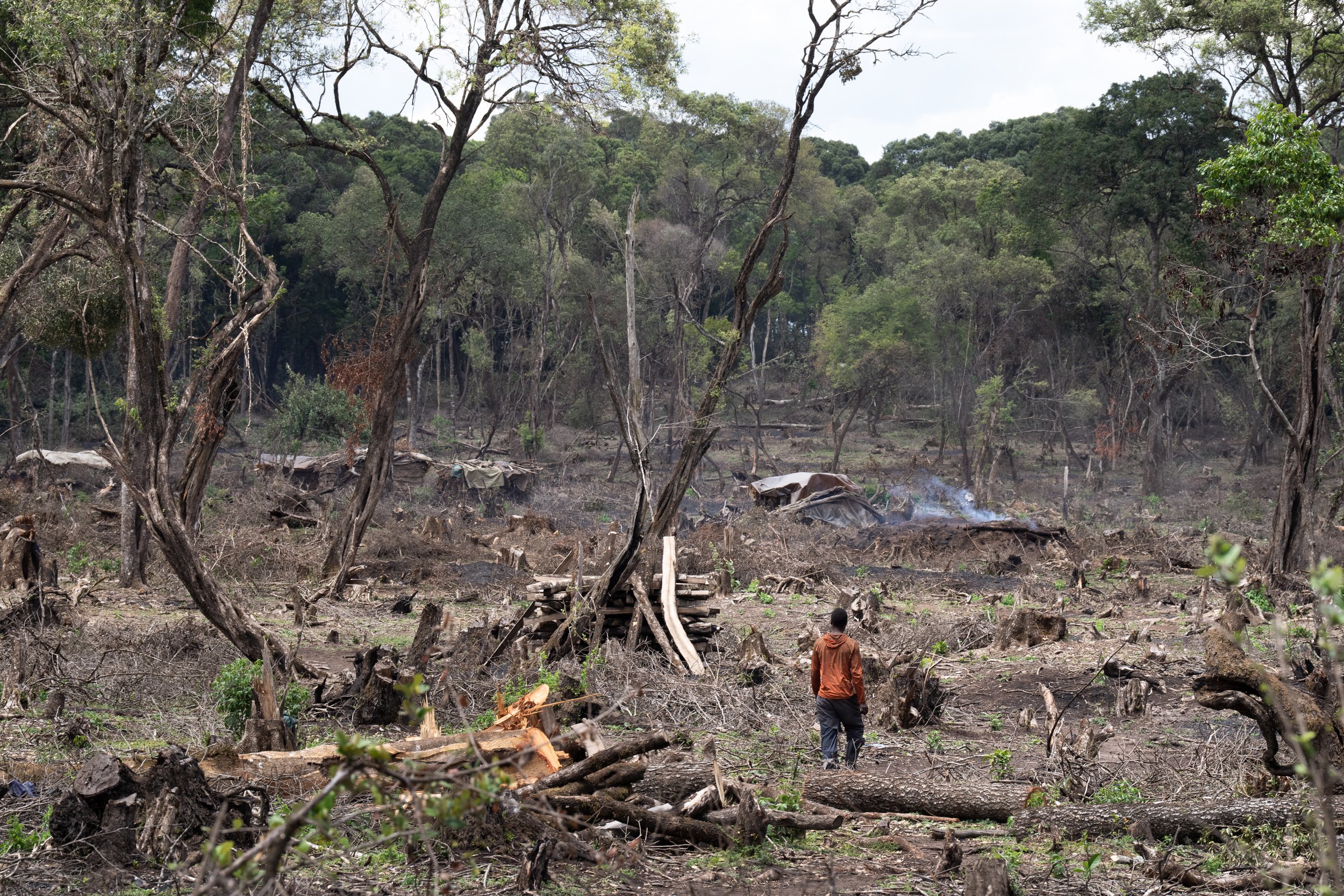
Image by Will Burrard Lucas
2026: Every. Pangolin. Counts.
In partnership with Kenya Wildlife Service, we launched a landscape-wide tagging and monitoring programme:
Every. Pangolin. Counts.
The objective is clear:
Tag and monitor every remaining Giant Ground Pangolin in Nyekweri.
This marks a strategic shift - from habitat protection alone to integrated species-level safeguarding.
The early weeks were slow and uncertain. Then momentum built.
Within the first six weeks, our teams successfully located and tagged four Giant Ground Pangolins - two adult males and two adult females.
For the first time:
Individuals are monitored nightly using VHF and satellite telemetry
Movements are mapped against electric fence locations
Rangers receive alerts when pangolins approach risk zones
Intervention can happen before mortality occurs
Already the technology is revealing new insights into pangolin behaviour.
Camera traps have captured two tagged pangolins sharing a burrow for over eight weeks - an unusually long pairing that may be linked to mating behaviour. Thermal imaging has also allowed rangers to locate individuals emerging from burrows at night, improving our ability to track and safeguard them without disturbance.
This is a major step forward: from securing space to actively safeguarding each individual animal.
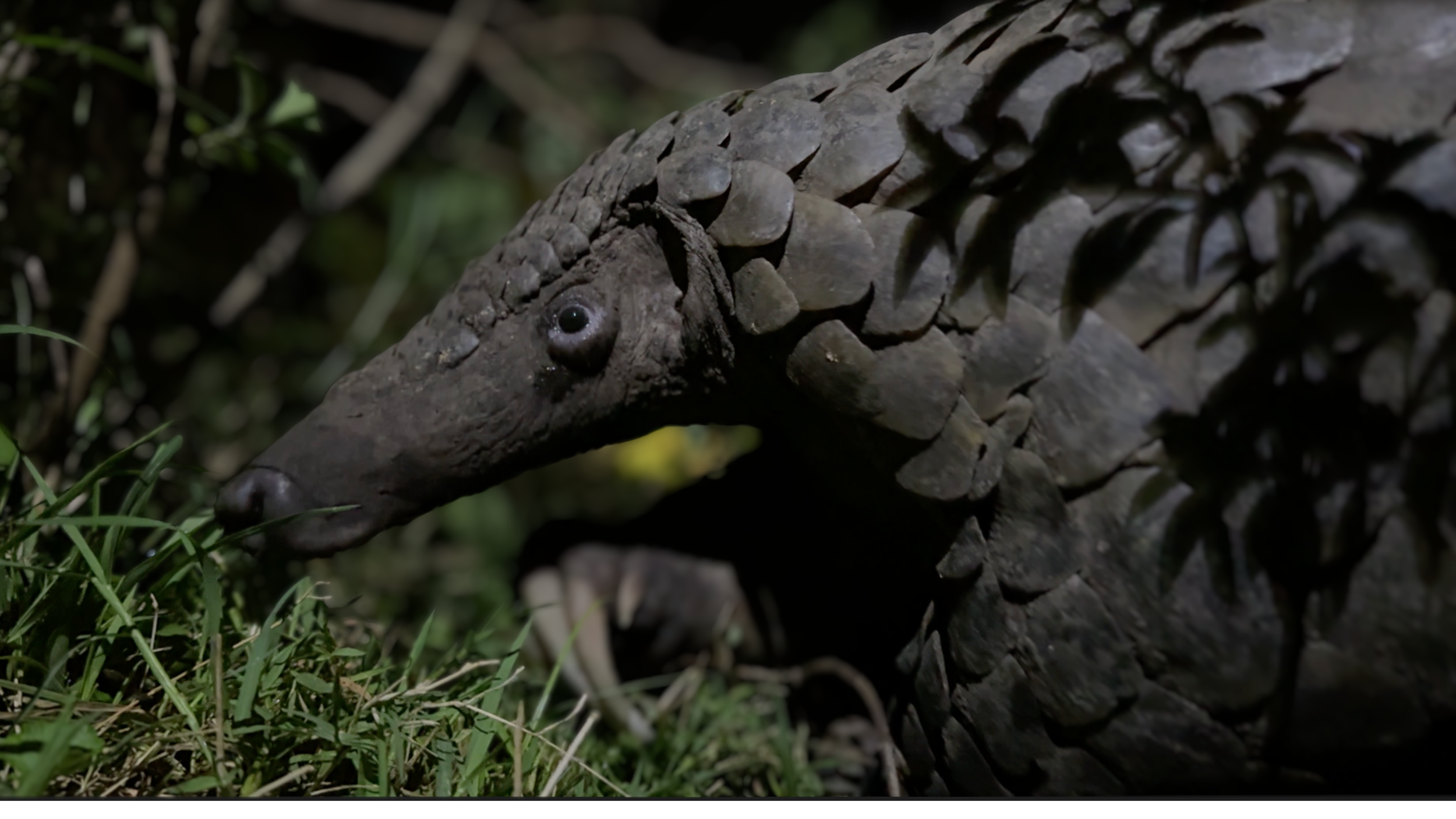
Picture by Koen Betjes
Strengthening the System
Monitoring pangolins across a landscape requires infrastructure.
Chief Operations Officer Doug Braum worked alongside Head of Technology and Data Michael Koskei to establish a fully functional operations and control room, designed to centralise monitoring, coordination, and response.
This significantly increases our ability to safeguard both tagged individuals and the wider landscape.
Over the past six weeks we have:
Redeployed camera trap networks in high-use zones identified from 2025 data
Established a centralised operations room
Retrained and upskilled ranger teams
Integrated pangolin telemetry and mapped fencing into EarthRanger
EarthRanger now provides a unified operational platform where pangolin movements, electric fences, and ranger patrols are monitored together in real time.
This allows faster decisions and targeted responses across the landscape.
At first progress was quiet. Long nights passed with little sign.
Then suddenly things began to move.
Community reports and camera trap sightings led to several intense nights in the forest - and within six days three pangolins were successfully tagged, marking the turning point in the programme.
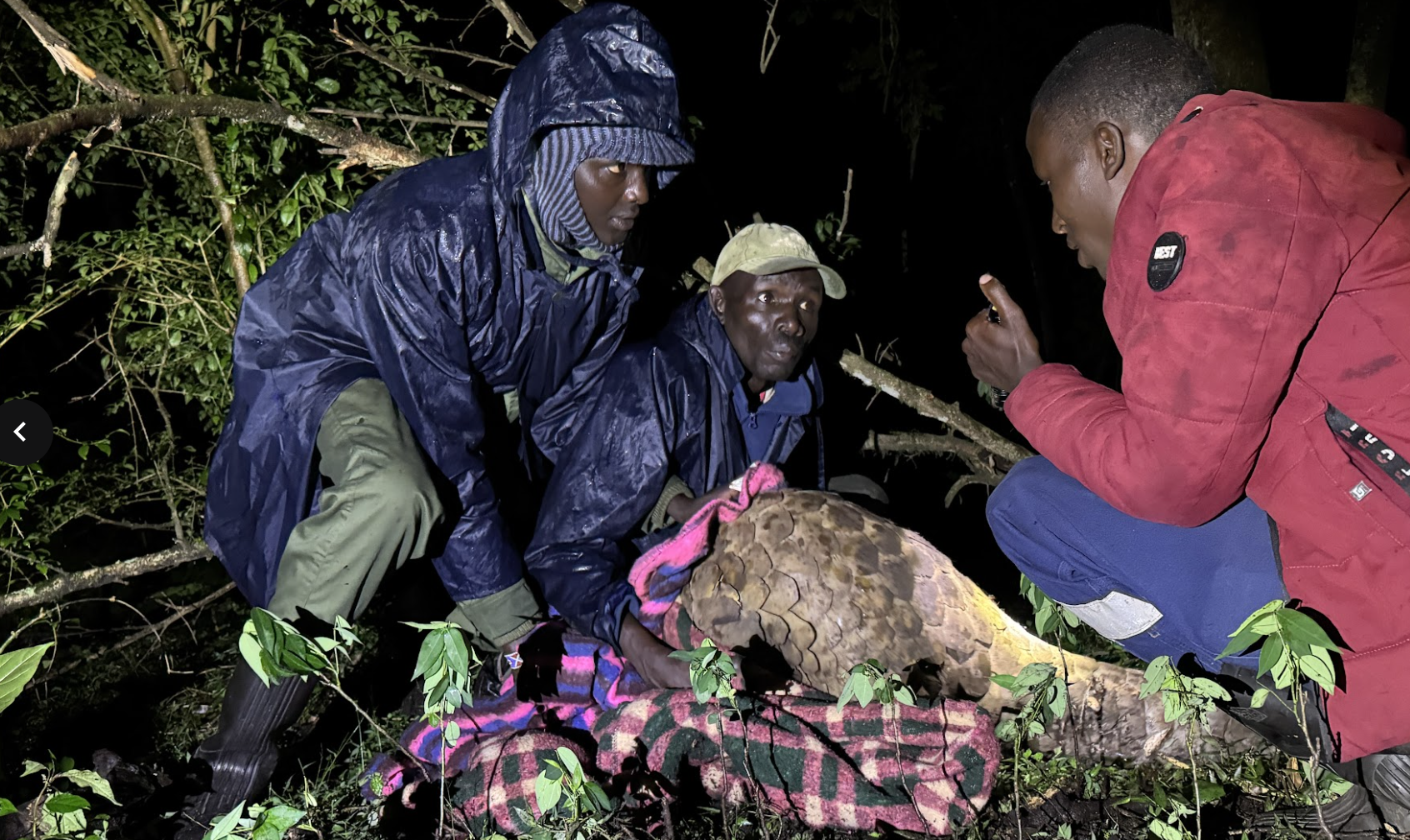
Image by Koen Betjes
Watch our 15 minute update by Claire Okell on our progress so far this year!
Challenges Ahead
Not all pangolins are yet tagged.
Satellite signals degrade in dense forest.
Fence installation continues in agricultural areas.
Currently, only 53% of landowners permanently de-electrify fences.
And pangolins, of course, do not recognise conservation boundaries.
Our next phase focuses on:
Expanding protected habitat toward 7,500 hectares
Strengthening telemetry networks
Connecting conservation blocks through ecological corridors
Embedding EarthRanger as the operational backbone of pangolin protection
This is strategic, landscape-scale conservation.
Why Nyekweri Matters
Nyekweri is a rare Congo-Guinea forest ecosystem, perched above the Maasai Mara.
It is a refuge for species found nowhere else in the landscape - including Kenya’s only known population of Giant Ground Pangolins.
If we fail to adapt, we risk losing not just individuals, but an entire biodiversity stronghold.
If we succeed, we demonstrate that fragmented, community-owned landscapes can become powerful conservation assets.
2025 was about securing space.
2026 is about securing survival.
The face of pangolin conservation in Nyekweri is evolving - from protection alone to real-time safeguarding of the last giants.
And that shift is happening because of you.
Thank you for standing with us.
Warm regards,
Dr Claire Okell
-
No. Pangolin welfare is always the top priority.
Tagging is done in partnership with Kenya Wildlife Service, with veterinarians and animal health technicians involved in the process. Pangolins are not sedated. They are gently restrained while a tracking tag is attached, a process that usually takes less than 10 minutes.
Once released, pangolins immediately move back into the forest and continue their natural behaviour. Monitoring teams track their movements from a distance to avoid interfering with feeding or activity.
-
Occasionally predators such as hyenas may chew the tags. To reduce risk, the tags are designed with breakaway points so that if something pulls or bites the tag, it detaches without harming the pangolin.
-
Based on previously tracked individuals, home ranges appear to vary widely depending on age and sex.
So far, ranges have been observed between 7.5 km² and around 50 km².
Understanding these movement patterns is one of the key goals of the tagging programme.
-
Community partnerships are central to protecting pangolins.
So far, the programme provides direct financial benefits to over 250 people, and over 1,200 people indirectly through family members.
Beyond financial support, conservation
-
There are many ways people can support pangolin conservation:
Raising awareness and sharing information
Supporting conservation organisations
Fundraising for pangolin projects
Educating communities and schools
Contributing skills such as research, communications, or fundraising
Every action helps build global awareness and support for pangolin protection.