
Beneath the Surface: How plants, ants, termites, and pangolins are shaping the future of Nyekweri
When we talk about pangolin conservation, it’s easy to focus on what we can see: camera traps, patrols, tracking data, the rare thrill of a sighting.
But pangolins don’t survive on sightings.
They survive on systems.
Beneath the forest floor - and within the termite mounds and ant nests scattered across Nyekweri - lies the foundation of the pangolin’s world. Ants and termites are the primary food source for Giant Ground Pangolins, and the plants that shape this landscape determine where those insects can thrive.
This is why our newest project focus brings botany, ants, termites, and pangolins together - not as separate studies, but as one interconnected story.
Seeing the forest as a system, not a species
Very little documented ecological information exists for Nyekweri. This project is practical conservation monitoring. It is about building the knowledge base needed to protect pangolins and the ecosystems they rely on.
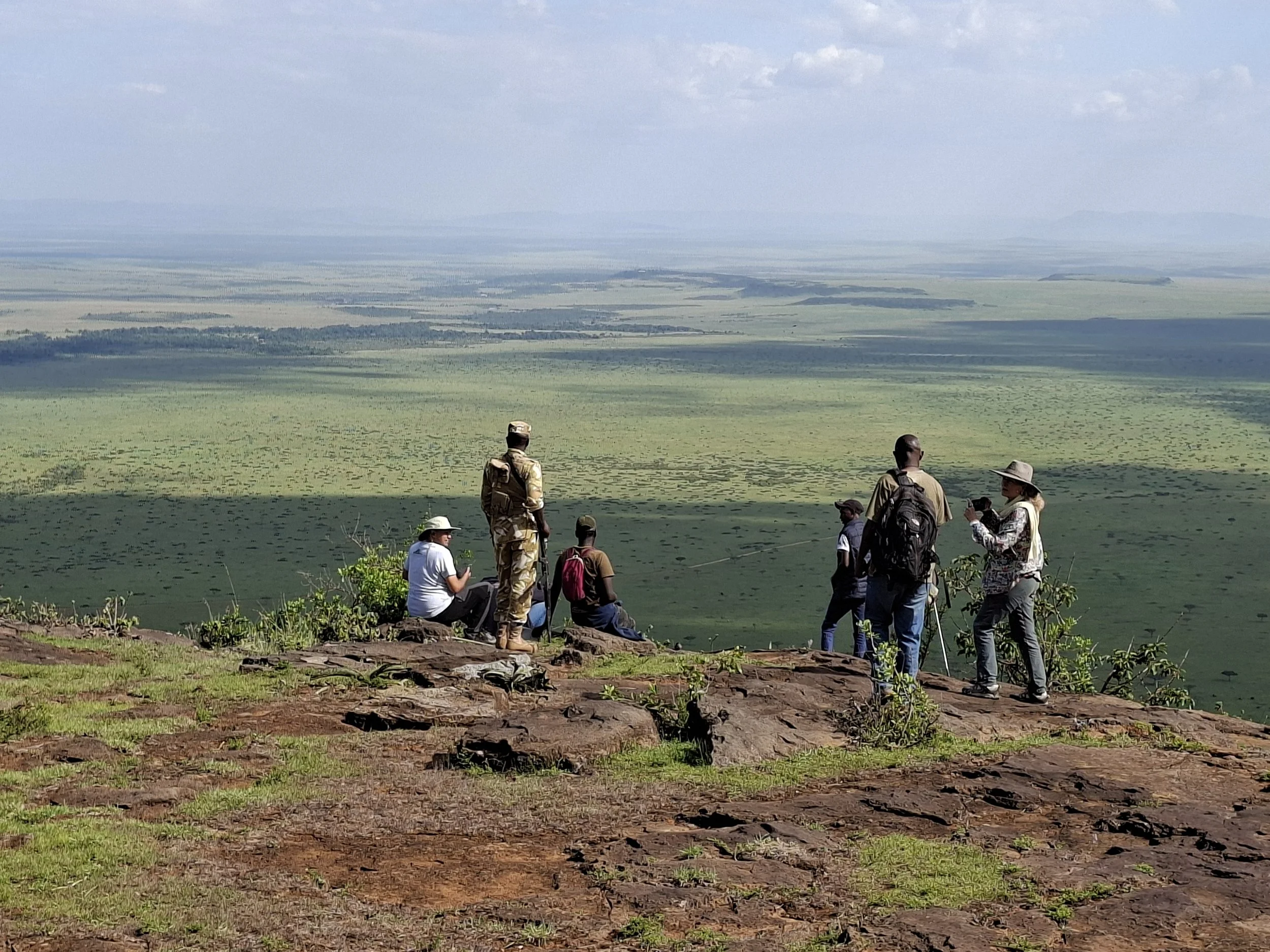
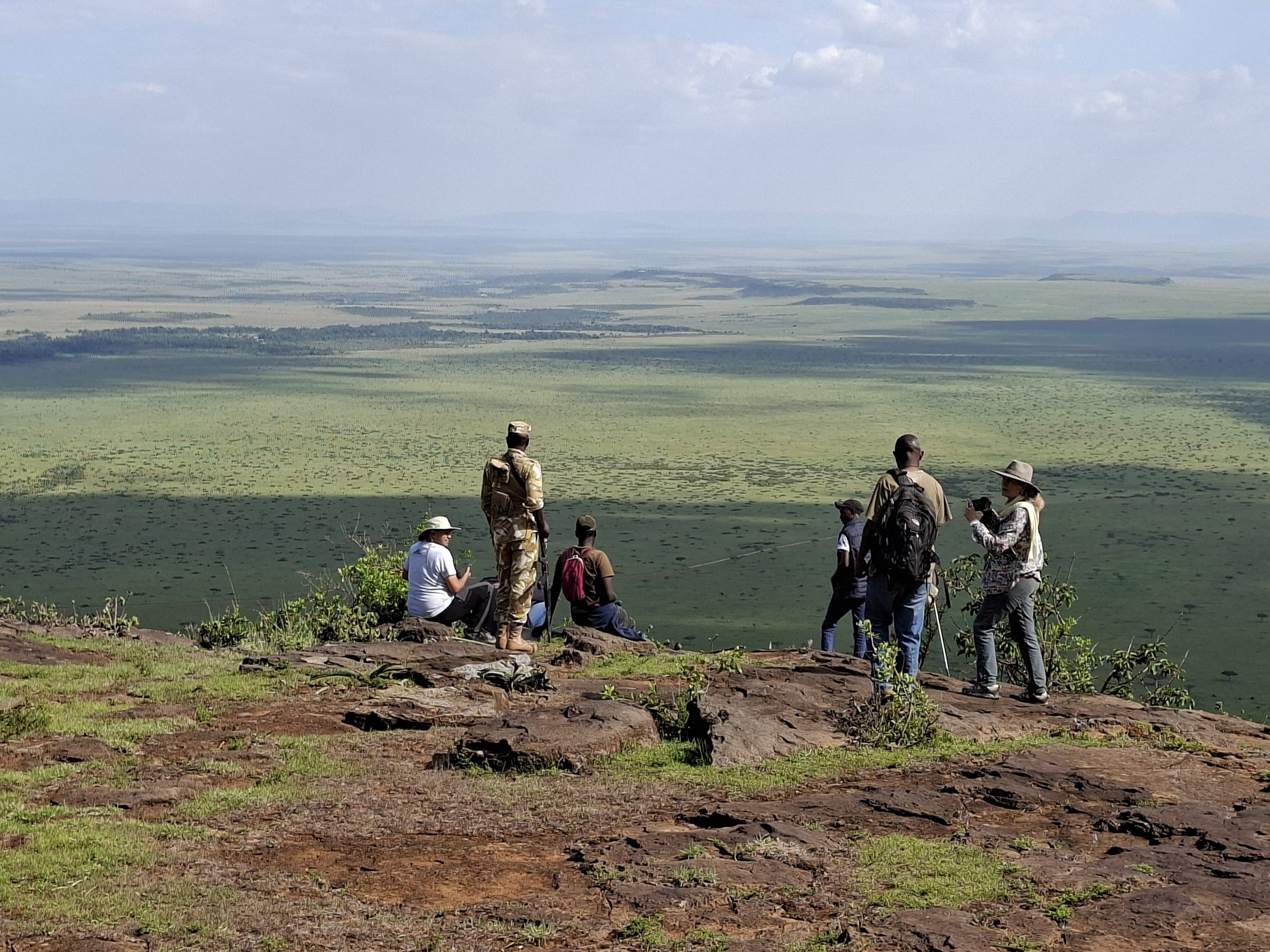
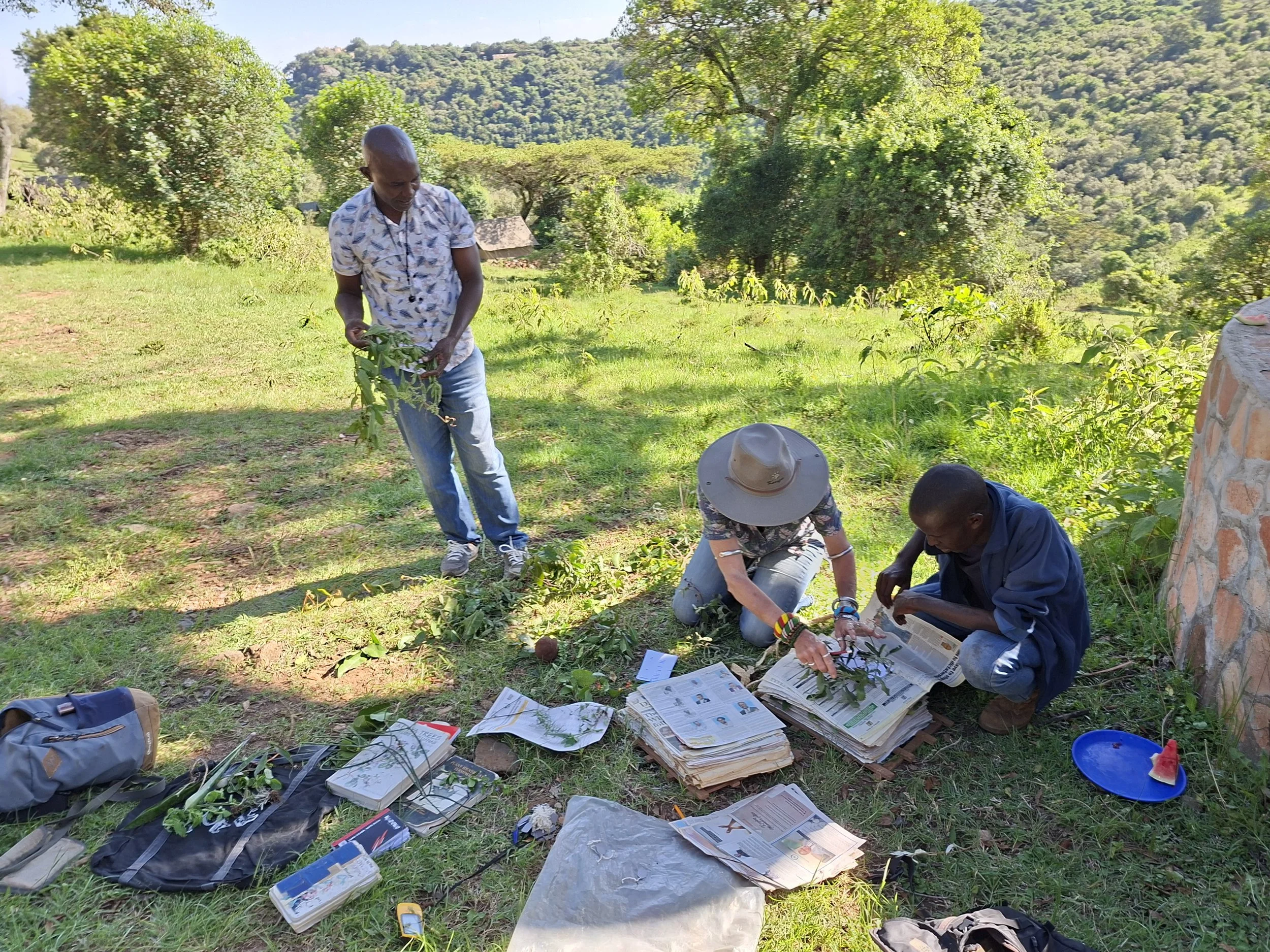
Naomi Moss arrived in the field alongside botanists Anne Powys (ethnobotanist), John Kimeu from the National Museums of Kenya, and entomologist Dr Dino Martins. Working with TPP field staff, the focus was simple: begin compiling baseline species lists for plants, ants and termites, and strengthen our understanding of how this landscape functions.
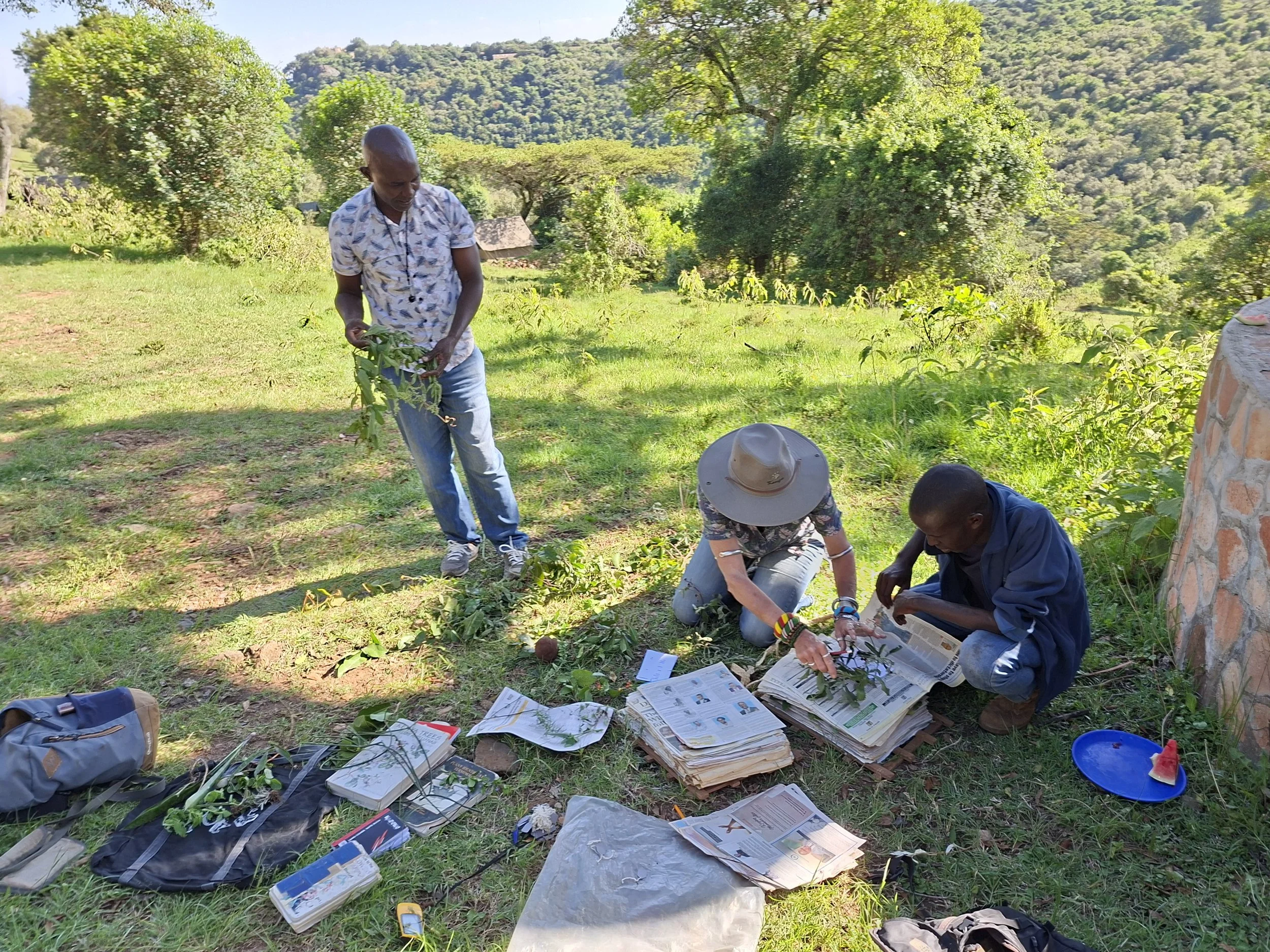
Over 100 plant species were pressed and preserved, with hundreds more recorded across different habitat types. These samples will contribute to the National Museums of Kenya Herbarium - helping establish a reference point for what exists in Nyekweri today.
Plants tell stories. Dense patches of a single tree species hint at historical clear-cutting decades ago. Other areas show long ecological continuity. Open woodland clumps on termite mounds form small ecological “islands,” each supporting different plant communities.
This context matters. Because protecting pangolins means understanding - and safeguarding the systems beneath them.
Termite mounds: where plants, insects, and pangolins meet
One of the most striking features of Nyekweri is its open woodland: scattered tree clumps rising from grassland, almost always centred on termite mounds.
Botanists observed that each of these clumps contains a different mix of plant species, functioning like small islands of biodiversity. These clumps support birds, insects, mammals - and still allow grazing for local communities.
For pangolins, they are even more important.
Each mound represents:
a concentrated food source (ants and termites),
shelter and burrows,
and a node within a wider feeding network across the landscape.
Understanding which termite species build these mounds, how resilient they are to disturbance, and how plant diversity influences their distribution is critical to understanding where pangolins can survive.
Did you know?... “we have hundreds of ant and termite species in Nyekweri, many of which we would need a microscope in a lab to correctly identify"" Naomi Moss
Ants and termites: the pangolin’s pantry
Giant Ground Pangolins are specialists.
Ants and termites are not just part of their diet - they are their main food source.
Yet surprisingly little is known about:
which ant and termite species pangolins rely on most,
how those species are distributed across different habitats,
or how resilient these food systems are to deforestation, drought, and land-use change.
This project aims to change that.
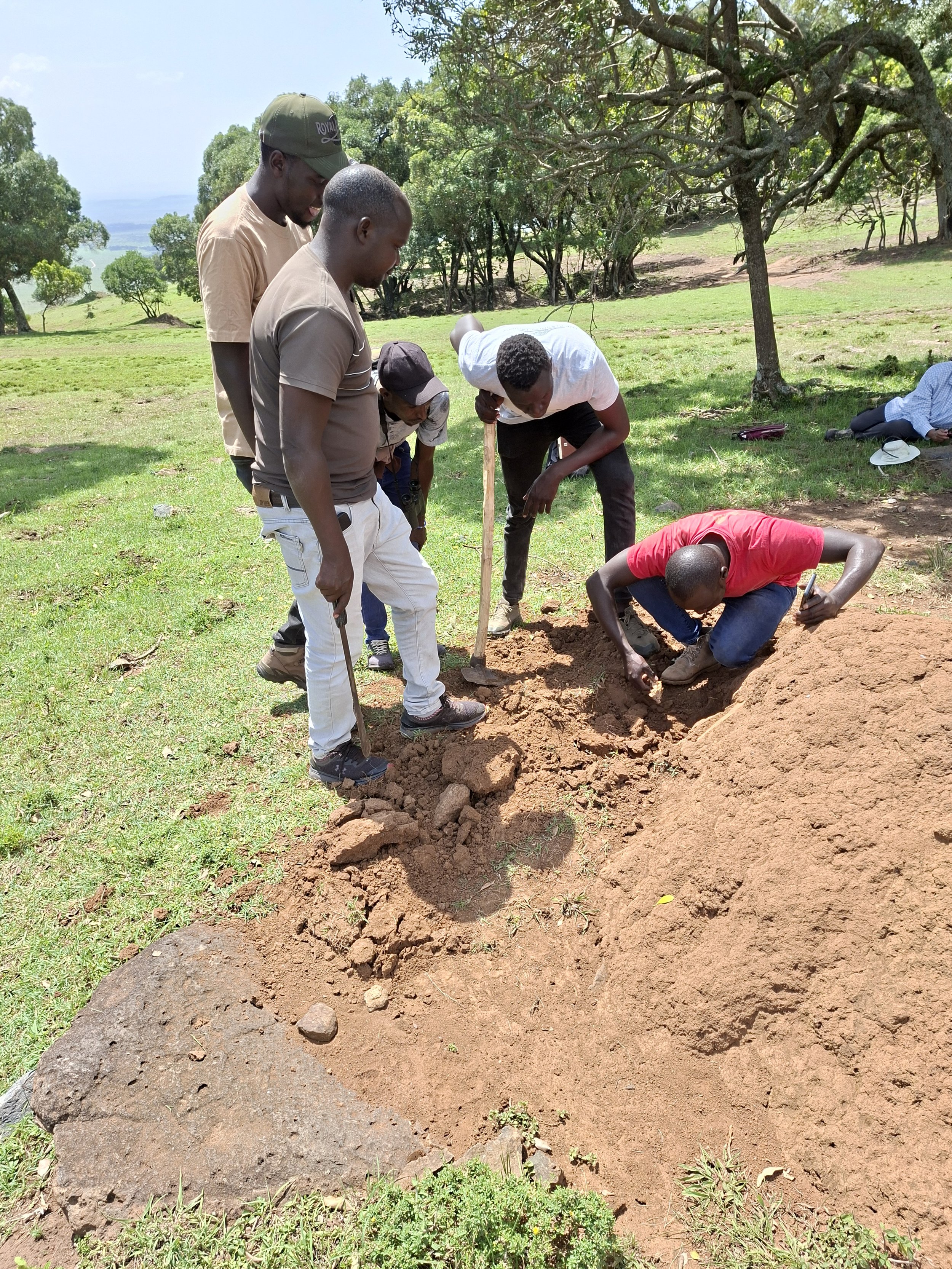
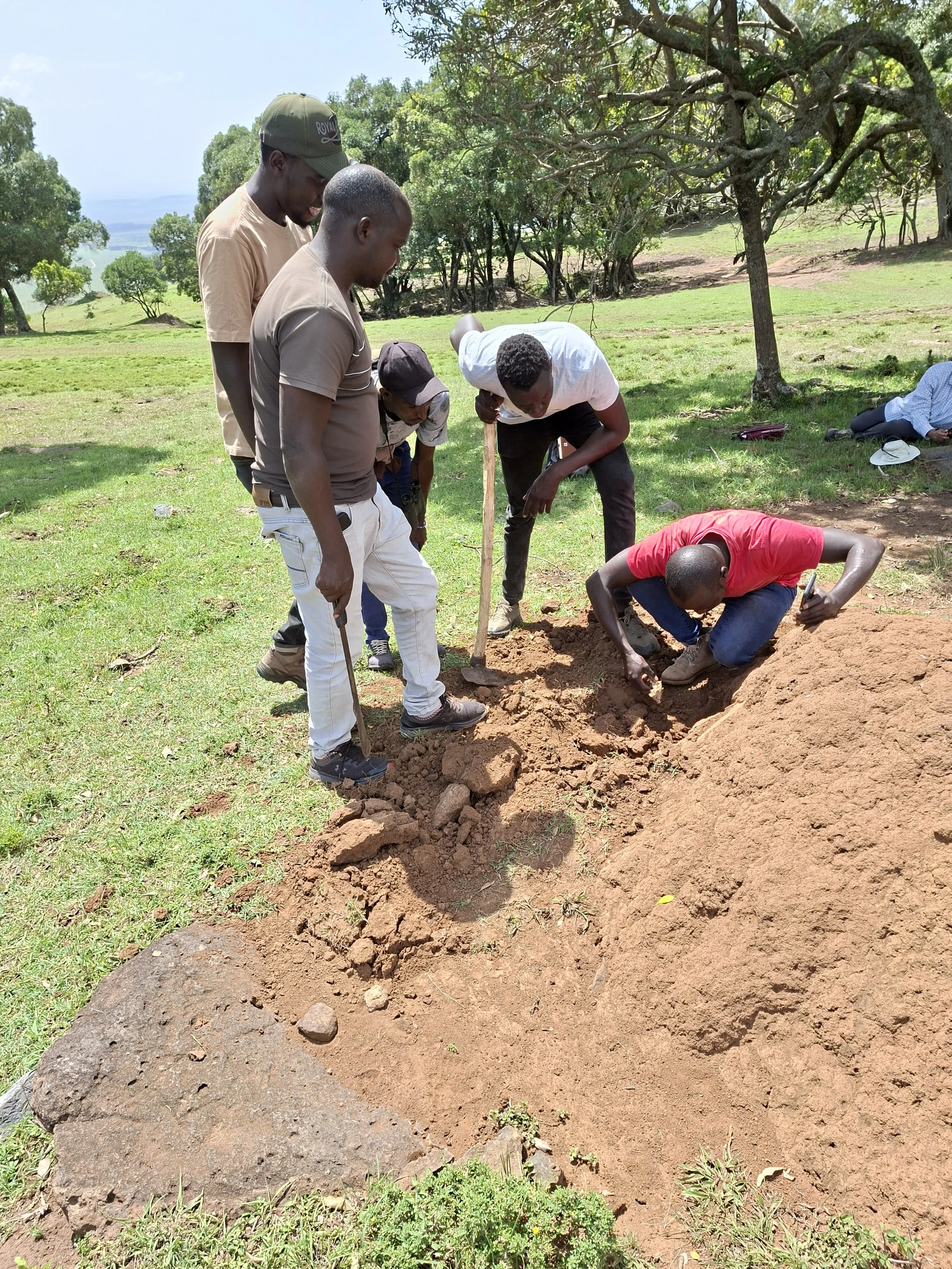
Before surveys began, the focus was on training and shared understanding. Field teams learned to identify ants and termites to genus level, practiced ethical sampling, and began to see insects not as background life, but as ecosystem engineers.
The learning was mutual. Team members shared traditional knowledge - including long-standing community uses of certain ant species - while entomologists revealed astonishing facts: termites as farmers, ant colonies functioning through collective “social stomachs,” and termite mounds that have been continuously occupied for tens of thousands of years.
“The botanists worked with Julius from our team and he learnt a lot from them, but also impressed them with his botanical knowledge including names of plants in Maa and their traditional uses. He says he has always just taken an interest in this and learnt from the elders, making an effort to go to the forest with them to learn.”
By the end of training, ants and termites were no longer overlooked. They were recognised as the foundation of pangolin survival.
Key Findings from the First Ant & Termite Survey
Survey teams recorded 2,190 observations across approximately 6.36 km² of habitat in Nyekweri.
Ants accounted for 67% of all observations, highlighting their widespread presence across the landscape.
More than 60% of all species recorded were ants, with ant diversity exceeding termite diversity in every habitat type surveyed.
Open woodland made up nearly half (48%) of the survey area, reinforcing its importance as a habitat for biodiversity.
Deforested areas showed the greatest variation in ant species, but only two termite species were recorded.
Former agricultural land supported the highest termite diversity, with six different termite species identified.
Technomyrmex ants were the most widespread ant group recorded across the landscape.
Odontotermes termites were the most widespread and abundant termite group recorded.
In intact forests and open woodlands, most observations were active nests, suggesting stable and established colonies.
Deforested areas showed higher levels of feeding activity than nesting activity, potentially indicating changes in habitat quality and resource availability.
From plants to insects to pangolins
This research is not happening in isolation.
As the monitoring team intensifies camera trapping and tagging efforts, understanding where pangolins feed and why - becomes just as important as knowing where they sleep or travel.
By linking:
plant diversity,
termite mound distribution,
ant and termite species,
and confirmed pangolin feeding sites, we begin to see the full picture.
Where plants persist, insects persist.
Where insects persist, pangolins can persist.
And where those systems break down, risk follows.
A living, connected story
This work is just beginning.
Over the coming months, ant and termite nest surveys will expand across intact forest, open woodland, farmland, and deforested areas. Samples from confirmed pangolin feeding sites will be analysed to species level. Botanical records will continue to grow with seasonal returns.
Together, these strands form a single story: how life beneath the surface supports life above it.
In a landscape under increasing pressure, protecting pangolins means protecting the systems they depend on - from trees, to termites, to people.
Sometimes, the smallest lives hold the biggest answers.
And in Nyekweri, those answers are just starting to surface.
Thank you to JRS Biodiversity Foundation for their support
-
The first week in the field brought together botanists, entomologists, and the TPP team to begin building a deeper picture of Nyekweri’s biodiversity -from trees to termites. Botanists documented an extraordinary diversity of plant life, pressing over 100 species and listing around 300, likely creating the first botanical record for Nyekweri in the National Museums of Kenya Herbarium.
At the same time, the ant and termite team focused on training: learning how to identify key genera, understanding insect ecology, and exploring how ants and termites underpin the entire landscape -including pangolin survival. From termite mounds acting as islands of biodiversity to insects consuming more biomass than large mammals, the week reshaped how the team understood what really drives this ecosystem.
-
Week two marked the transition from learning to action. While the monitoring team intensified camera trapping and night patrols -juggling elephants, hippos, rainstorms, and long nights -Naomi and the team completed final preparations for ant and termite surveys, including ground-truthing survey sites in deforested and leased areas.
Fresh pangolin feeding signs offered moments of excitement, even when sightings didn’t follow. Community conversations added another layer, with local people sharing past pangolin sightings and agreeing to report future ones. The week highlighted a familiar truth of fieldwork: progress often comes through patience, persistence, and adapting plans on the move.
-
By week three, ant and termite surveys were officially underway. Heavy rainfall changed ground conditions and insect activity, but early patterns began to emerge -particularly in open woodland areas dominated by Odontotermes mounds and active Aenictus (army ant) predation on other ant nests.
Alongside this, the monitoring team continued to refine camera trap placement, moving equipment based on pangolin activity and ruling out burrows dominated by other wildlife. The work became increasingly targeted, data-led, and interconnected -linking insects, habitat type, and pangolin behaviour in real time.
