
Throwback from the Field: The Pangolin Who Found Her Way Back
It was almost midnight on a September night in 2025 when the camp came alive.
At The Pangolin Project field camp, the night is usually quiet by then. Maybe the call of a hyena in the valley. Maybe impala moving softly past the tents. But on this night, tents were unzipping, torches were switching on, and the team was gathering fast.
A community report had come in: a pangolin had been seen near Kirindon.
For our team, every report matters. Community sightings are one of the most important ways we learn where pangolins still survive, especially in places we do not yet monitor regularly. But this sighting was different. Kirindon was far beyond the areas where we usually work, much further north than we expected to find a Giant Ground Pangolin.
Within minutes, the team was in the vehicle and heading into the dark.
A Call That Changed Everything
When the team arrived, they discovered this was not just a sighting.
A young female Giant Ground Pangolin had been caught on an electric fence.
Some young men, travelling past on a motorbike after watching a football match, had heard the fence shorting. When they stopped to investigate, they found the pangolin trapped. They managed to get the fence switched off, removed her from danger, and called Lesesia, one of the conservancy rangers, who alerted the team in camp.
We do not know how long she had been on the fence.
Joshua examined her carefully. Some of her scales had been damaged by the wires, but she was alive, alert, and stronger than anyone expected. She had no obvious burns or open wounds.
Then she tried to walk.
She was limping badly.
This young female, weighing just under 20 kilograms, had survived the fence, but something was clearly wrong with one of her back legs.
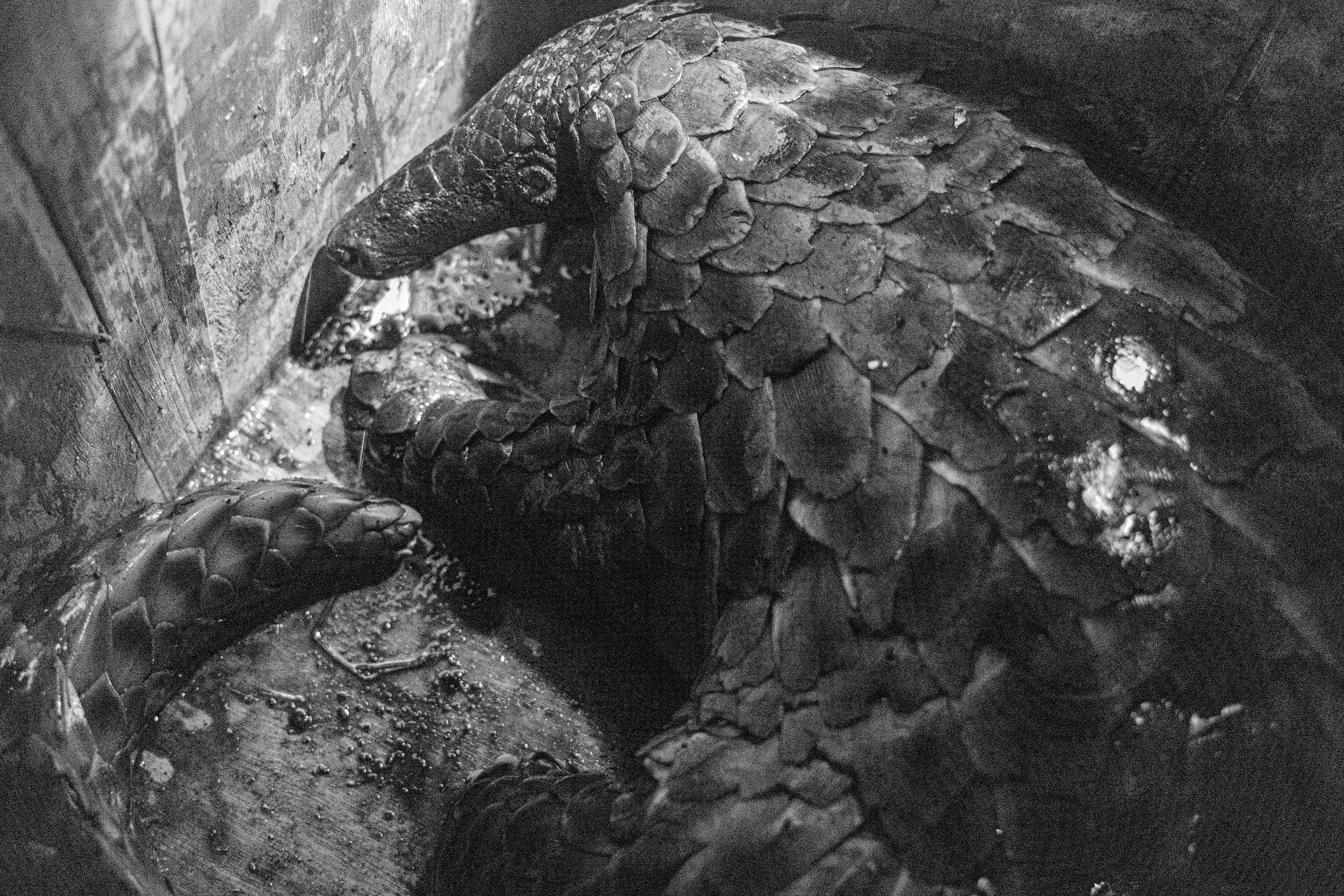
Image credit: Anthony Ochieng Onyango
Finding Safety in the Dark
The team had to make a decision.
Keeping her contained or transporting her could cause extreme stress and prevent her from feeding. But leaving her where she was, close to the fence and far from a known safe area, was not an option either.
So the team searched, in the dark, for a safe burrow.
Finding burrows is difficult at the best of times. Finding one at night, in unfamiliar terrain, while elephants and hippos may be moving through the same forest, is something else entirely.
With support from the community members who had found her, and with KWS involved in the response, the team eventually located a suitable burrow. She moved inside, adjusted the entrance, and disappeared into the safety of the earth.
Rangers and community members guarded the burrow through the night and into the next day to ensure she was not disturbed by people, dogs, or wildlife.
This is what pangolin protection often looks like: waiting in the dark, quietly, for one animal to have a chance.
Watching, Waiting, Tracking
The next evening, the team returned.
To avoid disturbing her, they waited quietly at a distance from the burrow, listening for movement in the dark. Once she emerged, Joshua carried out a second assessment, and the team fitted her with a VHF and satellite tag.
This was not for research.
It was for safeguarding.
The tag allowed the team to monitor her recovery, follow her movements, and intervene if she moved back toward danger.
She was still limping, but she was moving.
Then came the next challenge.
Instead of moving toward the forest, the tracking data showed that she had somehow made her way toward Kirindon town. We believe she had become frightened of fences, electric or not, and was funnelled by the fence lines and difficult terrain in the wrong direction.
She crossed a road and dug herself into a hollow beneath a hedge near someone’s property, trapped between fences and close to the edge of town.
She would not have found her way safely back to the forest without help.
Once again, rangers guarded her through the day while the team searched for a safer location. Less than two kilometres away, there was a protected forest patch under conservation lease.
As darkness fell, the team helped her move out of danger and into a safer burrow within the forest.
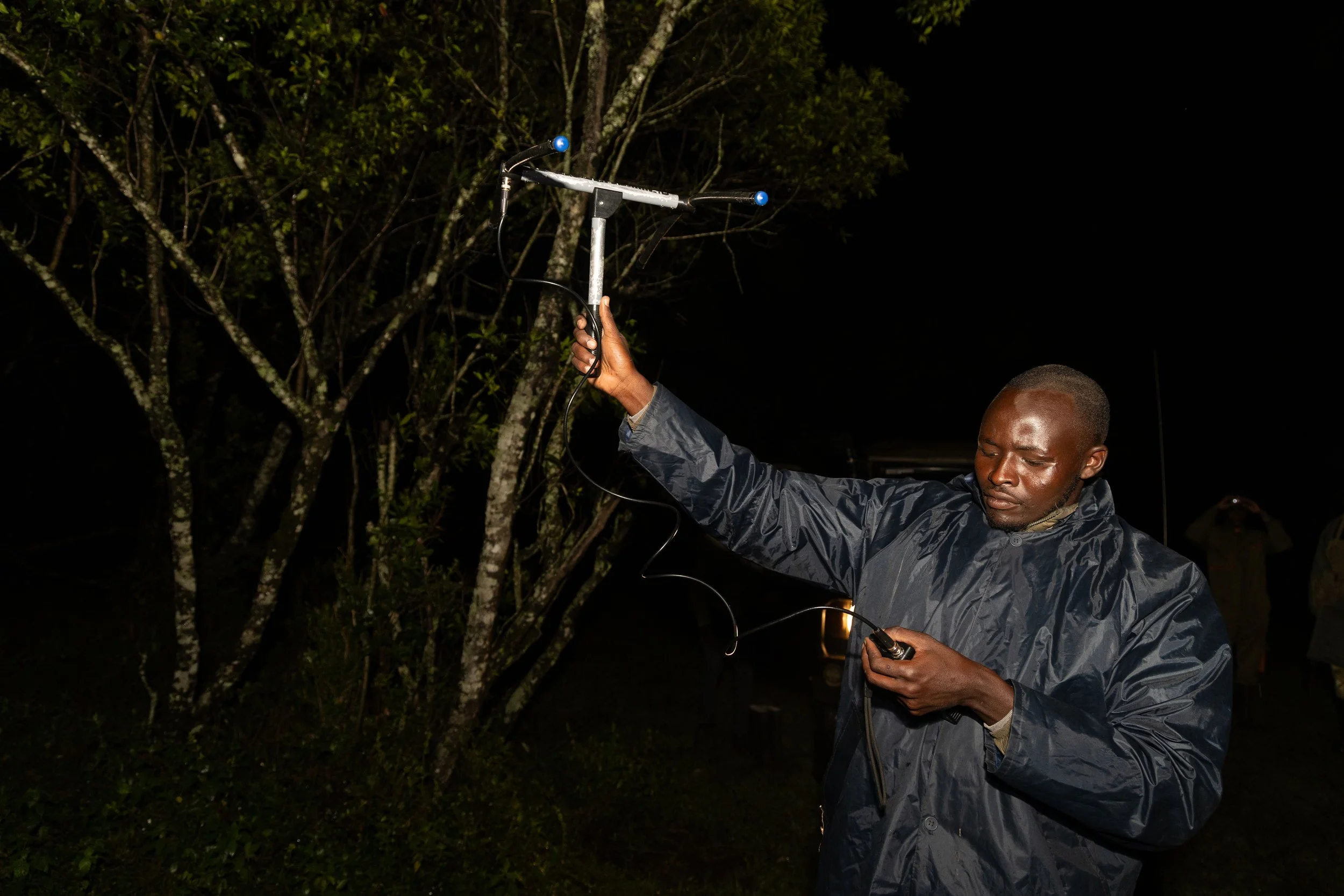
Image credit: Anthony Ochieng Onyango
Recovery Is Not Always Straightforward
For a few days, the signs were encouraging.
Her satellite points showed that she was staying within the forest patch. Camera traps recorded her emerging from the burrow, sometimes as early as 6:48pm, and returning later in the evening. The team found her footprints in a small stream and feeding signs nearby.
She was drinking. She was foraging. She was still fighting.
But on Thursday 2 October, the team went out again to check her physical condition. Using VHF tracking and EarthRanger, they located her near a stream in thick vegetation.
This time, they found an infected wound near her right hind leg. The team concluded it was likely caused by the electrocution.
The following day, after consultation with KWS and Mara Conservancy veterinary teams, a medical intervention was carried out. The operation was led by Dr Ashif from Mara Conservancy, with assistance from The Pangolin Project team and KWS rangers.
The wound was carefully cleaned, and she was given antibiotics.
On Monday 6 October, the team returned again. They located her with the VHF receiver, assessed and cleaned the wound, and adjusted the position of the satellite tag so it was no longer close to the affected area.
Monitoring continued.
A Small Pangolin, A Big Lesson
By 15 October, there was more good news.
Although no GPS points had come through overnight and the team initially struggled to locate her, they eventually found her using VHF at Oloisukut. On observation, she was no longer limping, and the wound appeared to be improving.
Since the rescue, she has had one VHF tag and three satellite tags as the team has worked to keep her monitored safely. She has moved through four leased parcels of protected land.
This led to five fences in the area being de-electrified to reduce the risk of this happening again.
This is the difference real-time protection makes.
Not just finding a pangolin after something has happened.
But learning from her movements. Responding to risk. Making the landscape safer behind her.
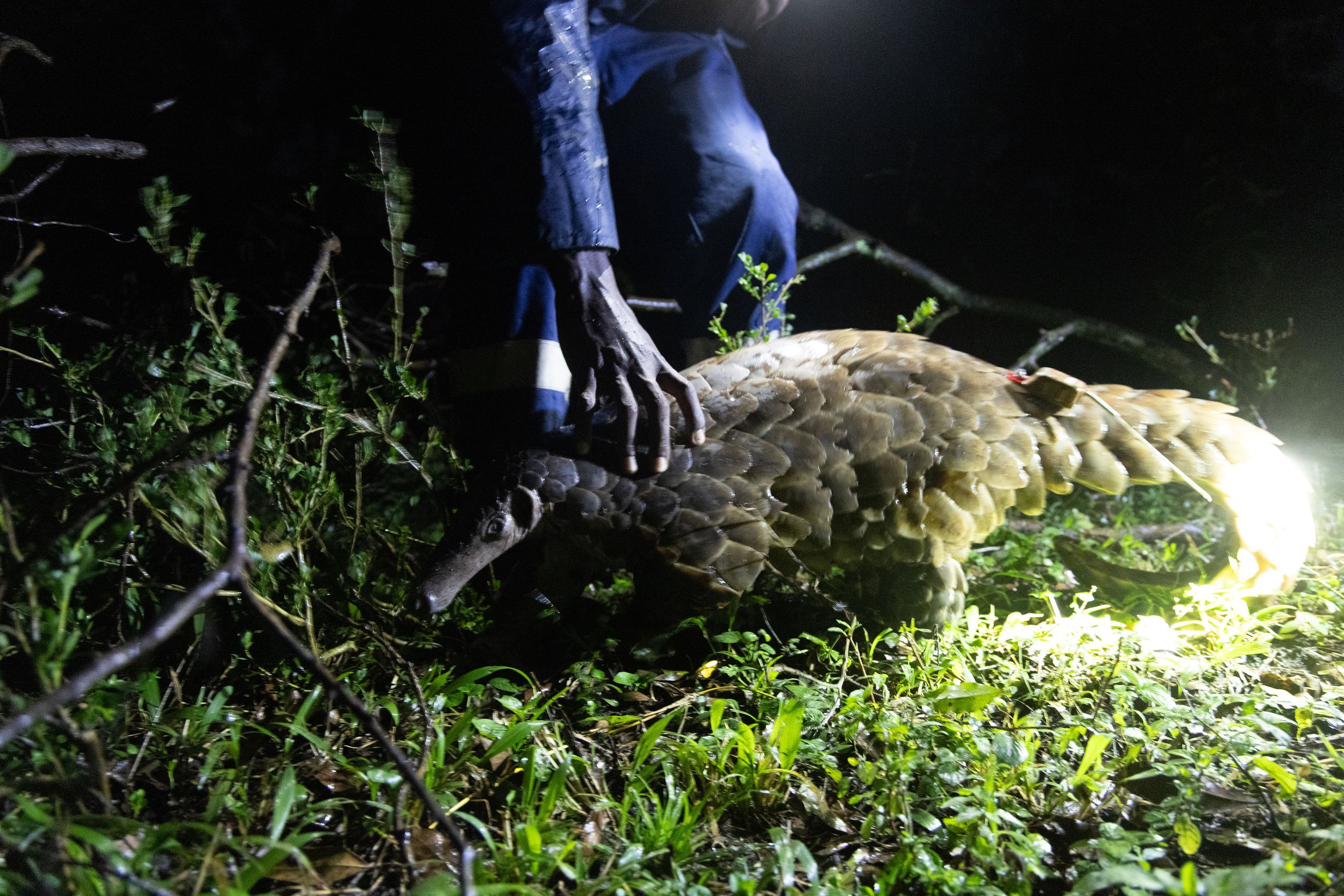
Image credit: Anthony Ochieng Onyango
Why This Story Matters
This young female has shown us so much.
She showed us that Giant Ground Pangolins are moving further through the landscape than we fully understood.
She showed us how dangerous even one live electric fence can be.
She showed us that community reports can save lives.
She showed us that technology matters — but only when paired with people willing to answer the call at midnight, drive difficult roads, guard a burrow through the night, track through thick forest, and keep coming back.
This is why Every Pangolin Counts.
Because every individual carries the future of this population.
And because the survival of Kenya’s last Giant Ground Pangolins depends not on one intervention, but on a whole system of protection: community awareness, ranger patrols, KWS partnership, veterinary response, EarthRanger alerts, satellite tracking, camera traps, leased habitat, and safer fences.
From One Rescue to a Safer Landscape
This rescue is not over.
The team will continue to monitor her closely, checking her movements, her wound healing, and her use of the forest. Michael is also working to integrate EarthRanger alerts for fence proximity and immobility, helping the team move from reactive rescue to proactive protection.
That is the future we are building.
A future where pangolins are not only found after a crisis, but protected before one happens.
A future where a community member knows who to call.
A future where a ranger can respond.
A future where a fence can be switched off before it becomes fatal.
A future where a young female pangolin, once trapped and injured, can return to the forest and keep moving.
Help Power the Patrol
Your support makes this work possible.
It powers the night patrols, camera traps, telemetry, veterinary response, ranger teams, and community engagement that keep pangolins alive in real time.
This young female survived because people acted.
Help us make sure the next pangolin has the same chance.
Power the Patrol. Protect the last giants.
