
From a community member's discovery on the eastern side of Kenya's Greater Mara Ecosystem to a remarkable collaboration across Kenya, this is the story of an orphaned pangolin pup and the people giving him a chance to return to the wild.
Image credits - Mara Elephant Project, Tropic Air Kenya and The Pangolin Project
One tiny pangolin. Many people. One shared chance at survival.
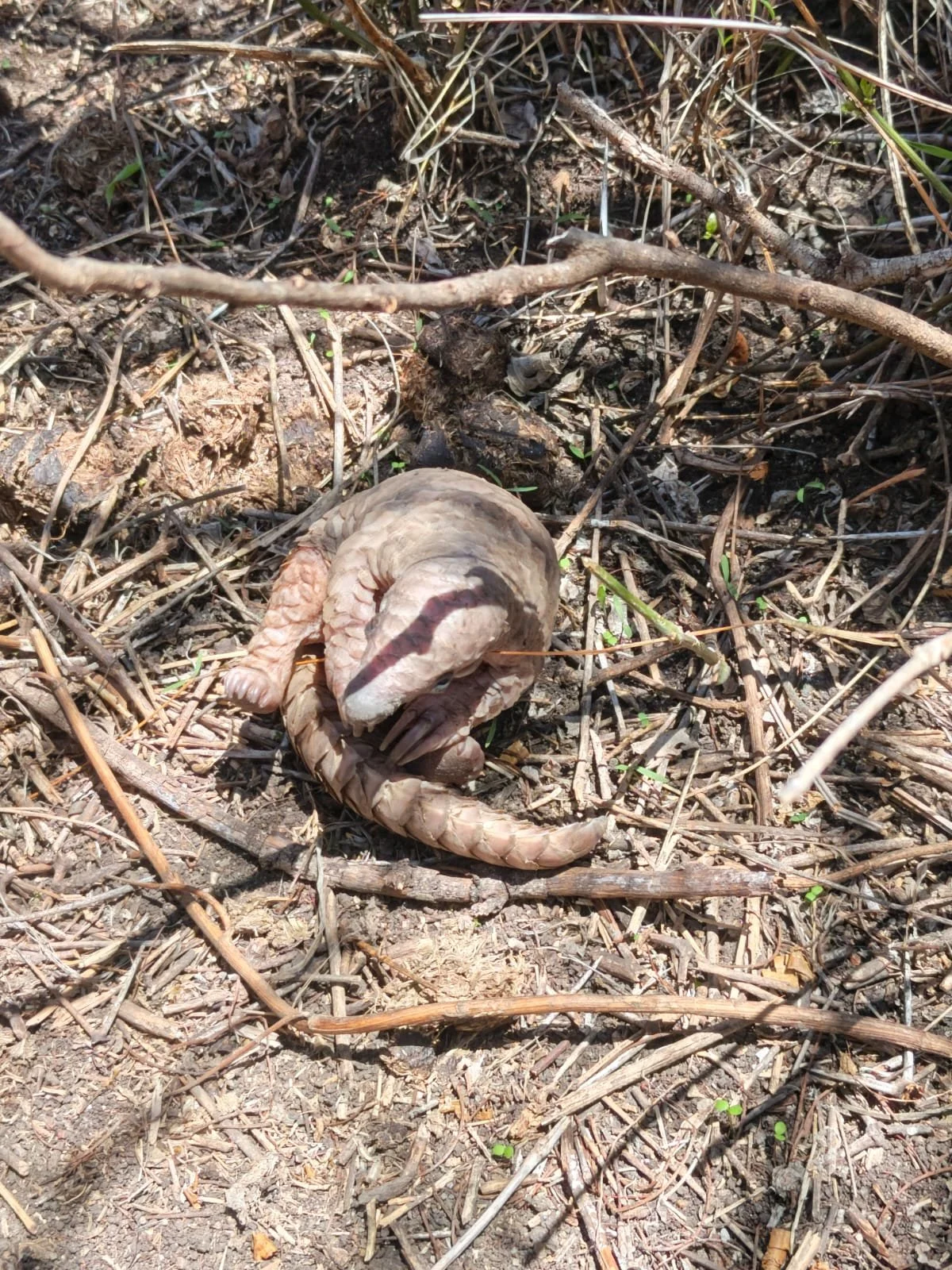
On 4 November 2026, a community member on the eastern side of Kenya's Greater Mara Ecosystem discovered something extraordinary. Alone beside a path was a tiny Temminck's ground pangolin pup.
Weighing just 320 grams, with soft, pink scales, he was estimated to be less than ten days old. At an age when he should have been safely curled against his mother, he was alone.
But someone noticed. And chose to act. That decision set in motion an extraordinary response involving local community members, Olderkesi Conservancy rangers, Mara Elephant Project (MEP), Tropic Air, Kenya Wildlife Service (KWS) and The Pangolin Project.
What followed reminds us that conservation is rarely the work of one organisation, one species, or one individual. Sometimes, it takes an entire community to give one tiny life a chance.
The discovery: A community chooses to act
The first call came from a community member who had discovered the pup in a dry, rugged area of the Greater Mara Ecosystem. The report reached Mara Elephant Project's control room, which mobilised MEP rangers alongside rangers from Olderkesi Conservancy. By the time the team arrived, a crowd had gathered around the tiny animal.
The rangers placed a jacket over him for protection but otherwise left him where he was.
A difficult decision lay ahead. Was he genuinely abandoned? Could his mother still be nearby? And would intervening help him, or risk separating him from her?
With considerable human activity around the discovery site, leaving him there also presented risks. MEP contacted Dr Claire Okell of The Pangolin Project and Kenya Wildlife Service to seek guidance on the appropriate next steps. The KWS veterinarian advised that the pup be transferred into specialist care. For the MEP team member coordinating the rescue, the first encounter was unforgettable.
"I was initially quite hesitant because I had never touched a pangolin before."
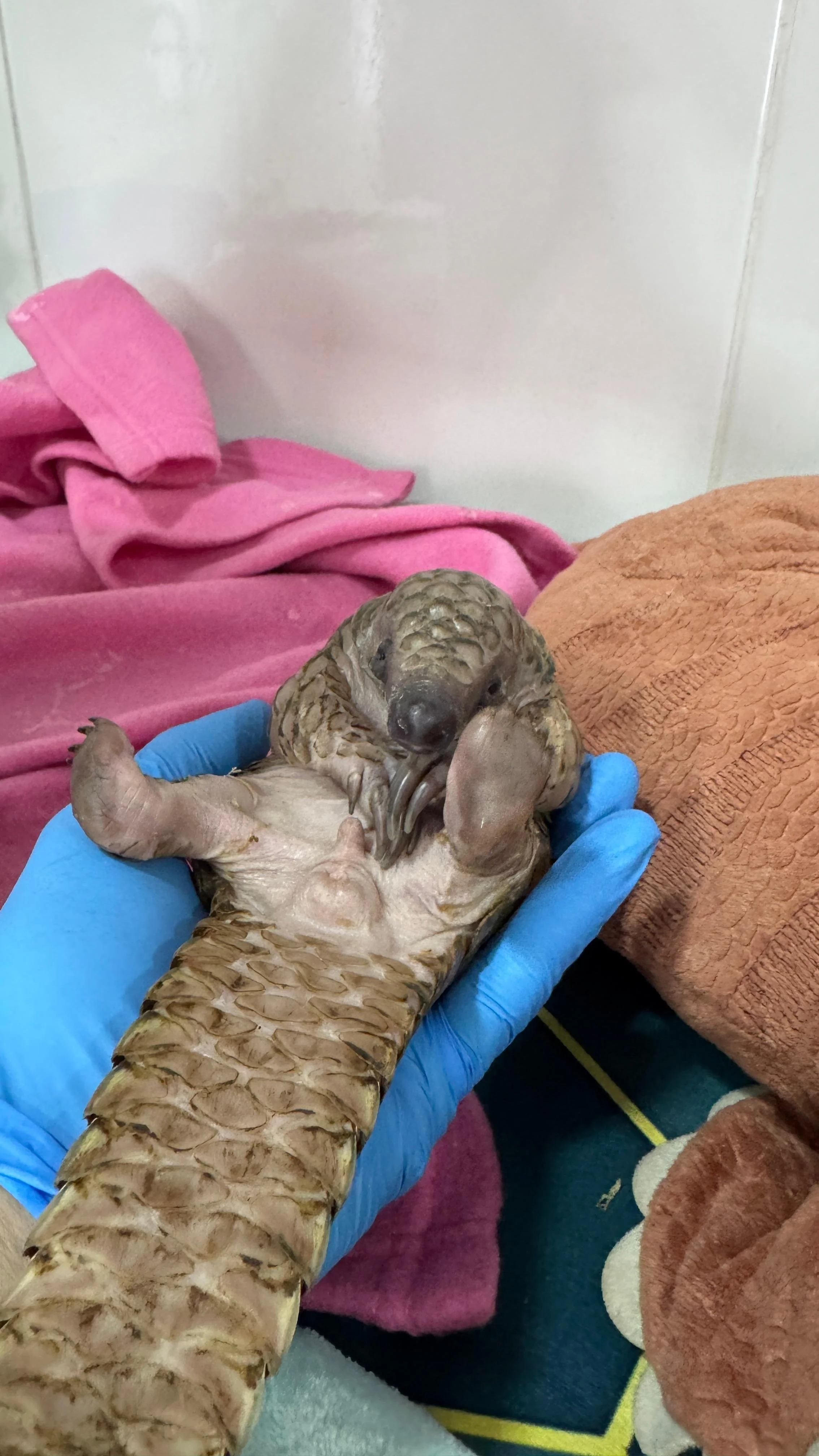
Despite the circumstances, the pup appeared surprisingly energetic and healthy-looking. His front claws resembled those of a bird, his back feet reminded the rescuer of a tortoise, and his scales were softer than expected.
"He was much smaller than I had imagined, quite chubby and surprisingly sweet. It was a very special experience to interact with an animal I had only ever seen before, but never actually held."
For a team more accustomed to protecting elephants and responding to wider wildlife threats, this was an unusual encounter. But as MEP reflected:
“For us, conservation is about protecting all wildlife, not just the species we encounter most often. Being able to respond to a situation like this, work alongside other conservation partners and contribute to giving such a rare animal another chance was very meaningful.”
A rescue made possible by collaboration
Once the decision to intervene had been made, the next challenge was getting such a young animal into appropriate care. MEP coordinated the response through its control room, working with the KWS veterinarian and The Pangolin Project to establish the safest next steps.
The Pangolin Project began preparing for the pup's arrival, including sourcing feeding equipment and milk formula. MEP mobilised its helicopter to transport the pup from the rescue area to The Pangolin Project team for his initial care and assessment. Behind the scenes, clear communication between the ground teams, wildlife authorities and conservation partners was essential.
MEP's use of EarthRanger helped coordinate the response and keep information moving between those involved.
As the MEP team explained:
“Another important factor was coordination. An operation like this requires clear communication between the control room, ground teams and partners. Having systems like EarthRanger helps us communicate quickly and coordinate our teams on the ground. Ultimately, it came down to making an informed decision, acting calmly and collectively, and prioritising the pup’s welfare.”
This was not simply a matter of collecting an animal and moving it elsewhere. It required careful judgement, specialist advice, coordination and trust between organisations. And the journey was far from over.
A very special passenger: Tropic Air steps forward
The next stage of the journey called for another partner with a very different kind of expertise. Tropic Air has been flying across East Africa for more than 30 years, supporting wildlife conservation and transporting animals including elephants, rhinos, giraffes and gorillas.
But a pangolin pup? That was a first.
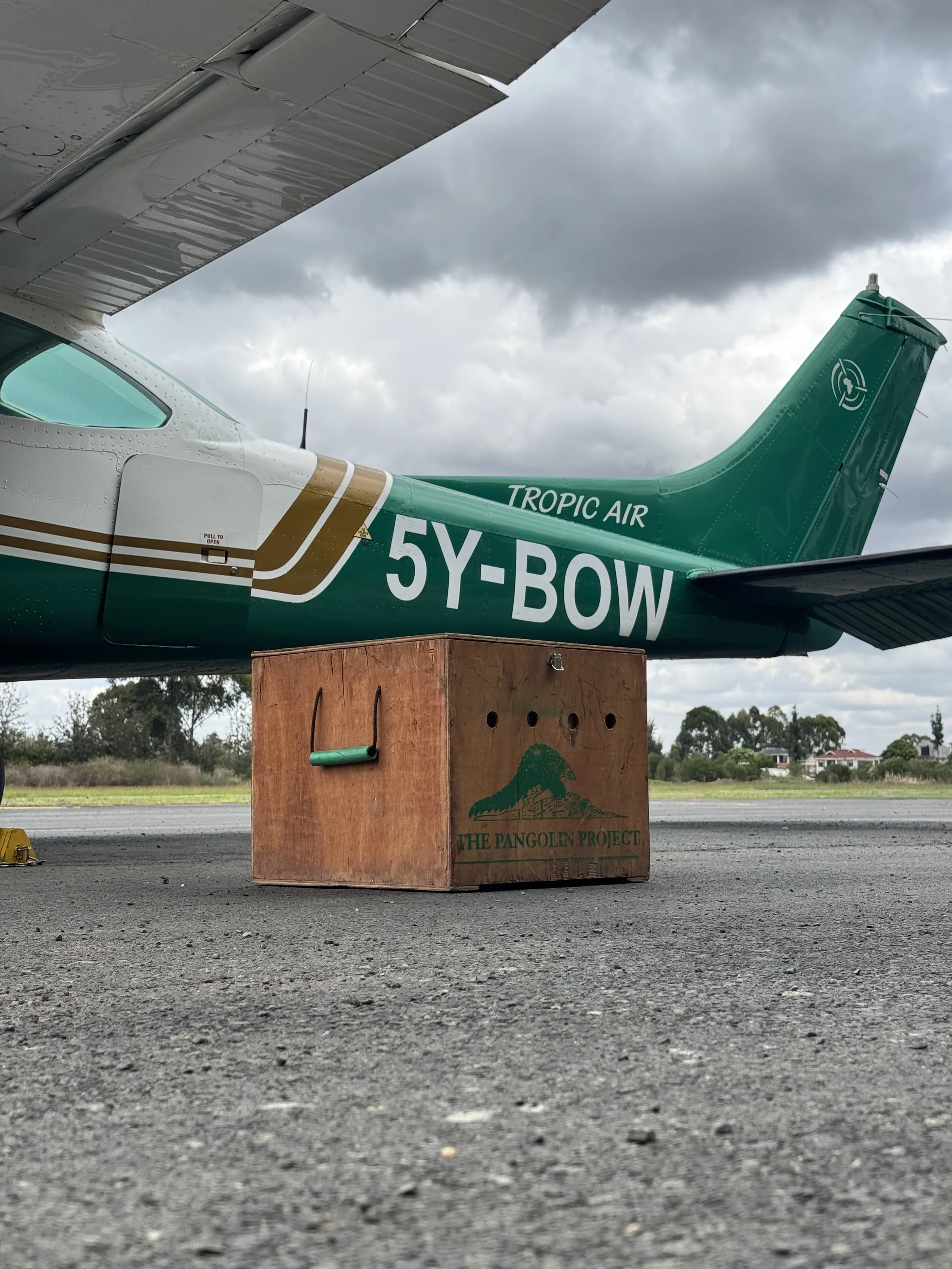
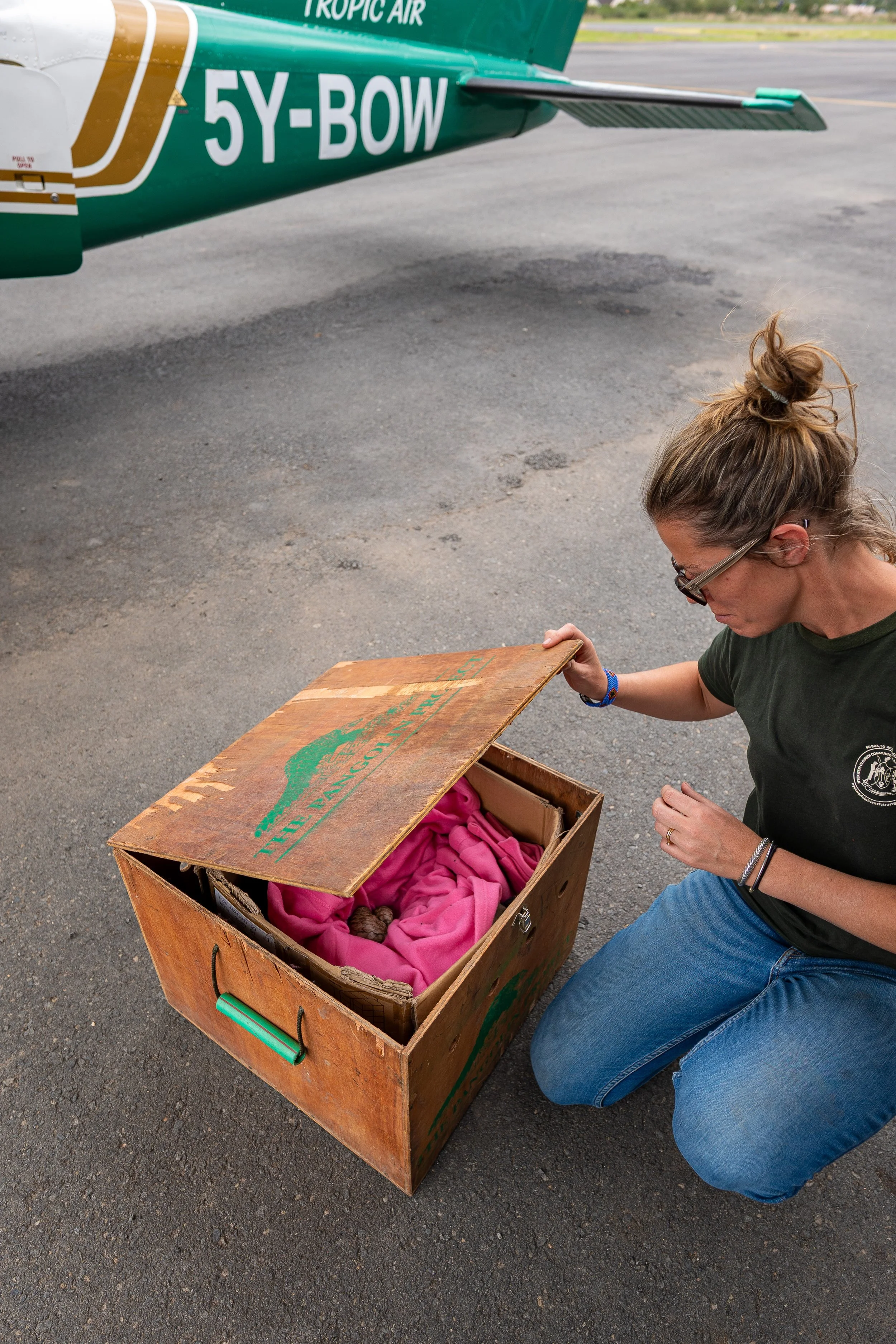
When Dr Claire Okell contacted the Tropic Air team about transporting the pup from the Maasai Mara to Nanyuki, they quickly offered their support, charging only the cost of fuel rather than their usual charter rate. Captain Iain Njiraini flew one of Tropic Air's Cessna 182 aircraft from Nanyuki to Kichwa Tembo Airstrip and back again.
The journey crossed dramatic terrain, including the Aberdare ranges, during Kenya's rainy season. For such a delicate passenger, finding a smooth and safe route was particularly important. Captain Iain carefully navigated the conditions, avoiding rough weather and turbulence wherever possible. The team affectionately referred to the pup as their "VIP passenger".
For Tropic Air, the experience left a lasting impression.
“What stayed with us most was simply how tiny the pup was. We’ve been involved in some remarkable wildlife movements over the years, including elephants, rhinos, giraffes and gorillas, and those are experiences you never really forget. But there was something quite different about seeing an animal this rare, this young and this vulnerable being carried onto one of our aircraft.”
And perhaps their reflection captures the extraordinary role that aviation can play in conservation:
"Sometimes the aircraft is carrying guests into the wilderness, and sometimes it is carrying an animal out of it because it needs help."
For a company that has supported wildlife conservation from the air for decades, this was another reminder of what their expertise could make possible.
What happened to his mother?
Following the discovery of the orphaned pup, his mother was also located nearby. Sadly, she was in poor condition and, despite efforts to help her, she did not survive. The circumstances surrounding her death are not yet fully understood.
Her loss makes this little pup's journey all the more poignant. At an age when he should still be entirely dependent on his mother, he now relies on the dedicated care of the Kenya Wildlife Service and The Pangolin Project teams.
While nothing can replace his mother, every effort is being made to give him the best possible chance of growing strong enough to one day return to the wild.
The first critical days: Every three hours, day and night
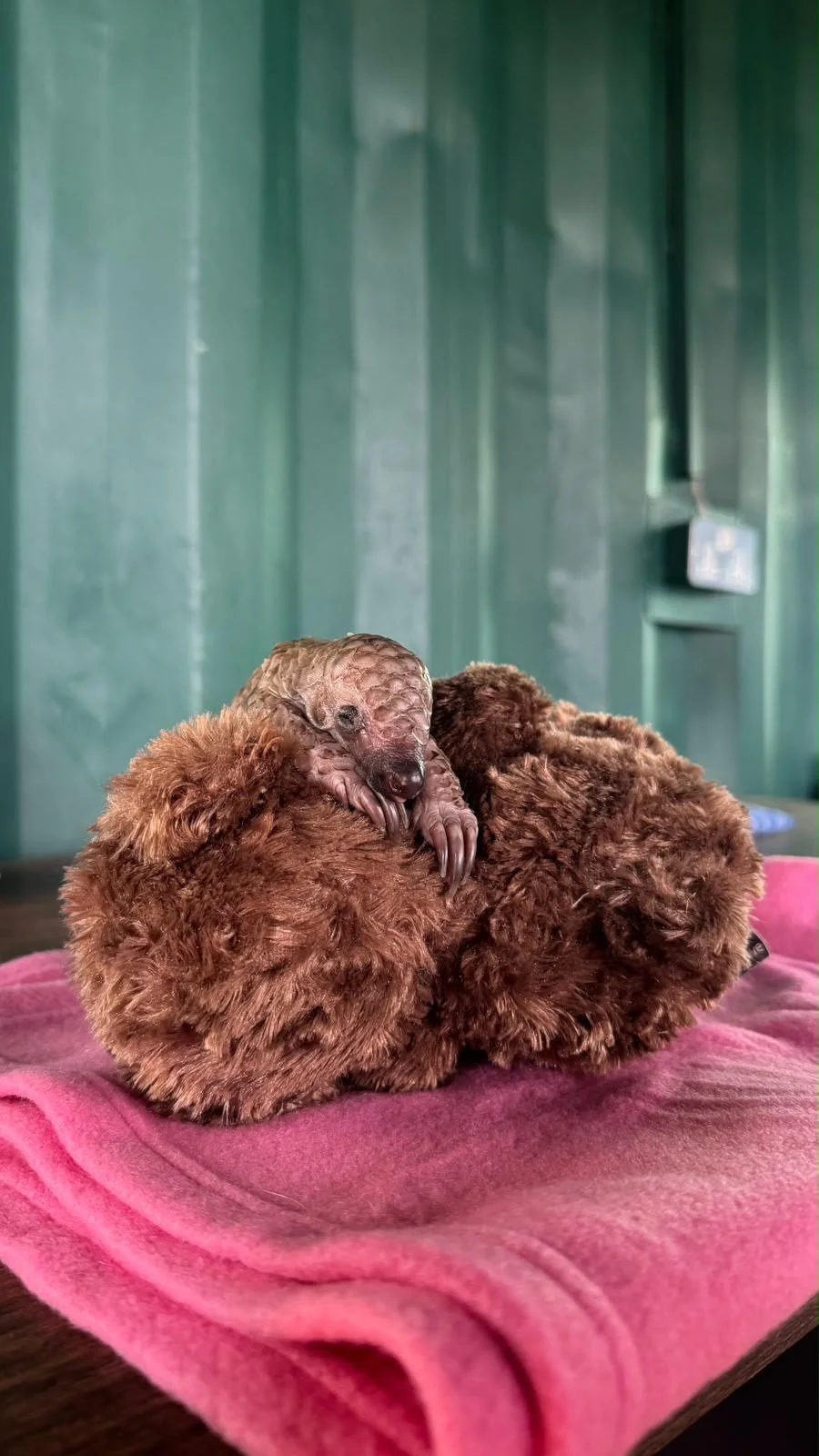
Today, this tiny male Temminck's ground pangolin is receiving specialist care through a rehabilitation effort undertaken in partnership between Kenya Wildlife Service (KWS) and The Pangolin Project.
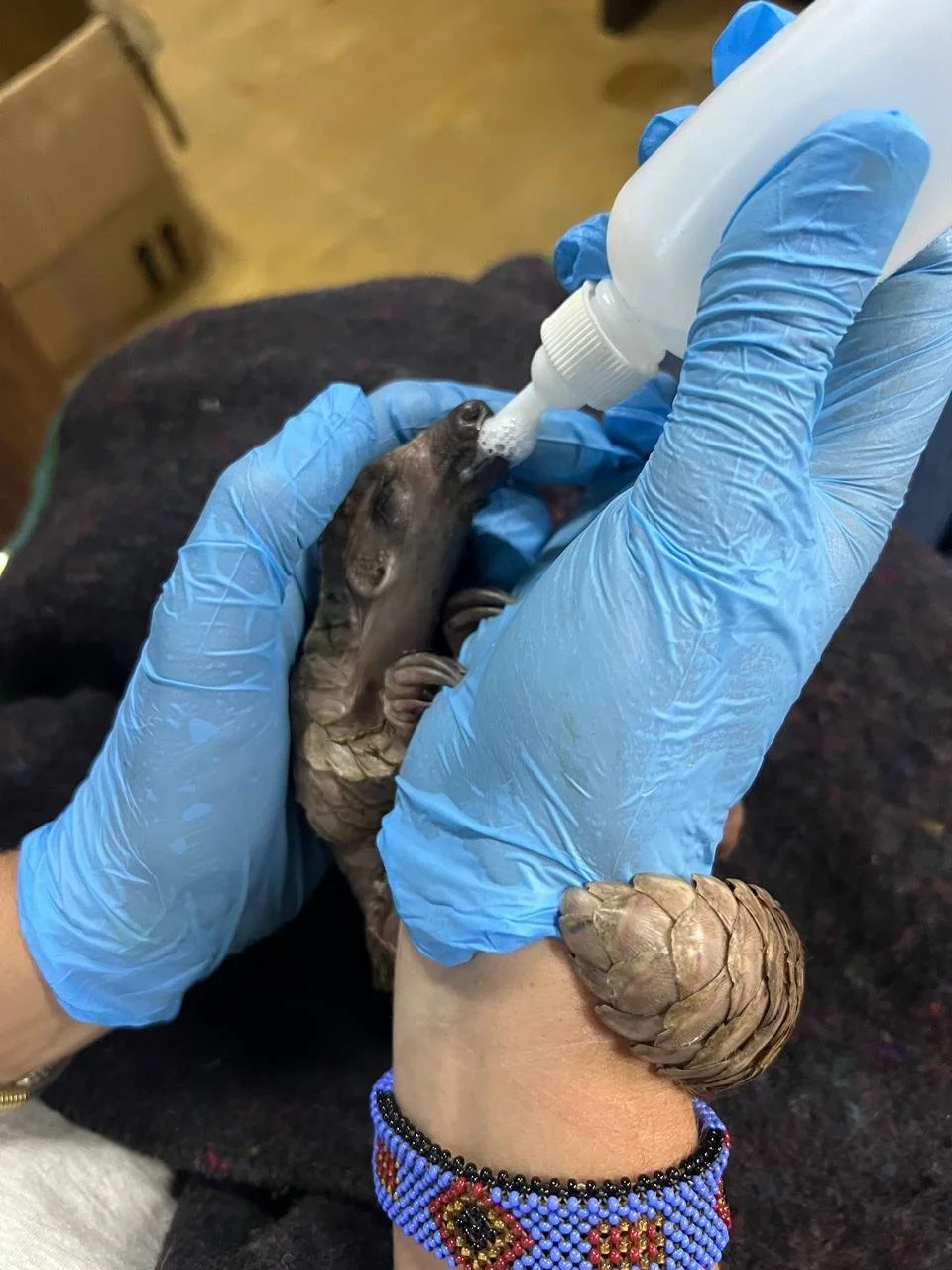
He has survived his first critical days and is feeding well. But his future remains uncertain. Two dedicated carers are bottle-feeding him every three hours, around the clock, under the supervision of KWS veterinarian Dr Mukami and Dr Claire Okell.
For Dr Mukami, who has previous experience hand-rearing other neonates at Nairobi's rescue and orphanage centre, caring for a pangolin pup is an entirely new challenge. Although the team can draw on the experience of rehabilitation specialists in other countries, there is still much to learn.
As Dr Mukami explains:
"I think it's anything that you do for the first time, I think that is the particularly challenging part of it. Like you don't know what to expect despite the fact that we have people that we can consult with."
But alongside the uncertainty, there have already been encouraging moments.
The pup is gradually becoming more comfortable with his feeding bottle, responding to new smells and showing curiosity about his surroundings.
And for the veterinary team, even the smallest physiological milestones are worth celebrating.
"Literally like having a little baby. You celebrate every single poop, every single normal physiological milestone is a big thing."
For a pup so young, these small signs of progress mean everything
Learning to be a pangolin
Keeping this little pup alive through his first days is only the beginning. The months ahead will be about helping him grow, develop and ultimately learn the skills he will need to survive independently in the wild.
For now, that means milk feeds, close monitoring and gentle opportunities to explore his surroundings.
Dr Mukami explains that the team is already looking for important early milestones: feeding confidently, passing urine and faeces independently, becoming curious about new smells and responding comfortably to different carers. The latter is particularly important. The team wants him to be comfortable with the people supporting his rehabilitation without becoming dependent on one individual.
As he grows, the next milestones will involve gradually exploring the world beyond his immediate care environment. From around two months old, the team hopes to see him taking short exploratory walks, investigating his surroundings and becoming increasingly curious about the world around him.
By approximately five months, the aim is to introduce supervised foraging experiences, helping him discover the ants and termites that form his natural diet. His carers will help him investigate ant hills and other potential food sources, gradually encouraging the behaviours he will need to survive independently.
And already, he is showing glimpses of his natural instincts. Dr Mukami has noticed that he is becoming increasingly active and restless at night, even though he is still too young to forage. These observations are giving the team valuable insights into how young Temminck's ground pangolins develop.
The ultimate hope is to release him into a suitable protected area when he is approximately 12–15 months old. But that decision will depend on his health, ability to forage independently and demonstration of natural pangolin behaviours.
The goal is not simply to raise a healthy pangolin. It is to help him become a wild one.
Building a future for rescued pangolins in Kenya
This rescue represents an important opportunity to develop specialist pangolin rehabilitation knowledge and capacity in Kenya. While the team is drawing on advice and experience from specialists in South Africa and Zimbabwe, this is understood to be the first time a pangolin pup has been hand-reared in Kenya.
For Dr Mukami, the experience is as much about learning as it is about caring for one extraordinary little animal.
She explains that raising the pup offers an opportunity to observe aspects of pangolin development and behaviour that are difficult to study in the wild. From his response to unfamiliar smells to his emerging activity patterns, each observation adds to the team's understanding.
As she reflects:
“This experience means that we are a step ahead in pangolin rehabilitation and conservation in Kenya, and it just gives us just more experience on our plate when it comes to handling these beautiful creatures.”
The Pangolin Project is also planning a dedicated rehabilitation care unit, working alongside KWS and specialist partners to support this pup and potentially other rescued pangolins in the future. The knowledge gained through his care could help strengthen future rescue and rehabilitation efforts
It takes a community to raise a pangolin
This pup's story began with someone choosing to help an animal they found alone beside a path.
That decision brought together an extraordinary network of people.
Community members who raised the alarm.
Conservancy and Mara Elephant Project rangers who responded.
Kenya Wildlife Service veterinarians who helped guide the rescue and now oversee his care in partnership with The Pangolin Project.
Pilots and aviation teams who made his journey possible.
And the carers now dedicating their days and nights to giving him a chance.
Each brought something different. Each contribution mattered.
As Mara Elephant Project reflected:
"It was a reminder that conservation is not just about responding to immediate threats, but also about giving wildlife the best possible chance to survive in the wild."
This is the power of conservation beyond organisational boundaries.
And now, there is an opportunity for others to become part of his journey.
It took a community to rescue him. It will take a community to raise him.
His rescue was only the beginning.
With up to 15 months of rehabilitation ahead, this tiny pangolin will need specialist care, dedicated people and continued support.
Will you help give him the best possible chance of returning to the wild?
Every gift helps support the care and expertise needed for the journey ahead.
Thank you for standing alongside everyone working to give him a future.
Follow his journey: The rehabilitation diary
We'll continue updating this story as the pup grows, sharing his progress, the challenges of rehabilitation and the people making his care possible.
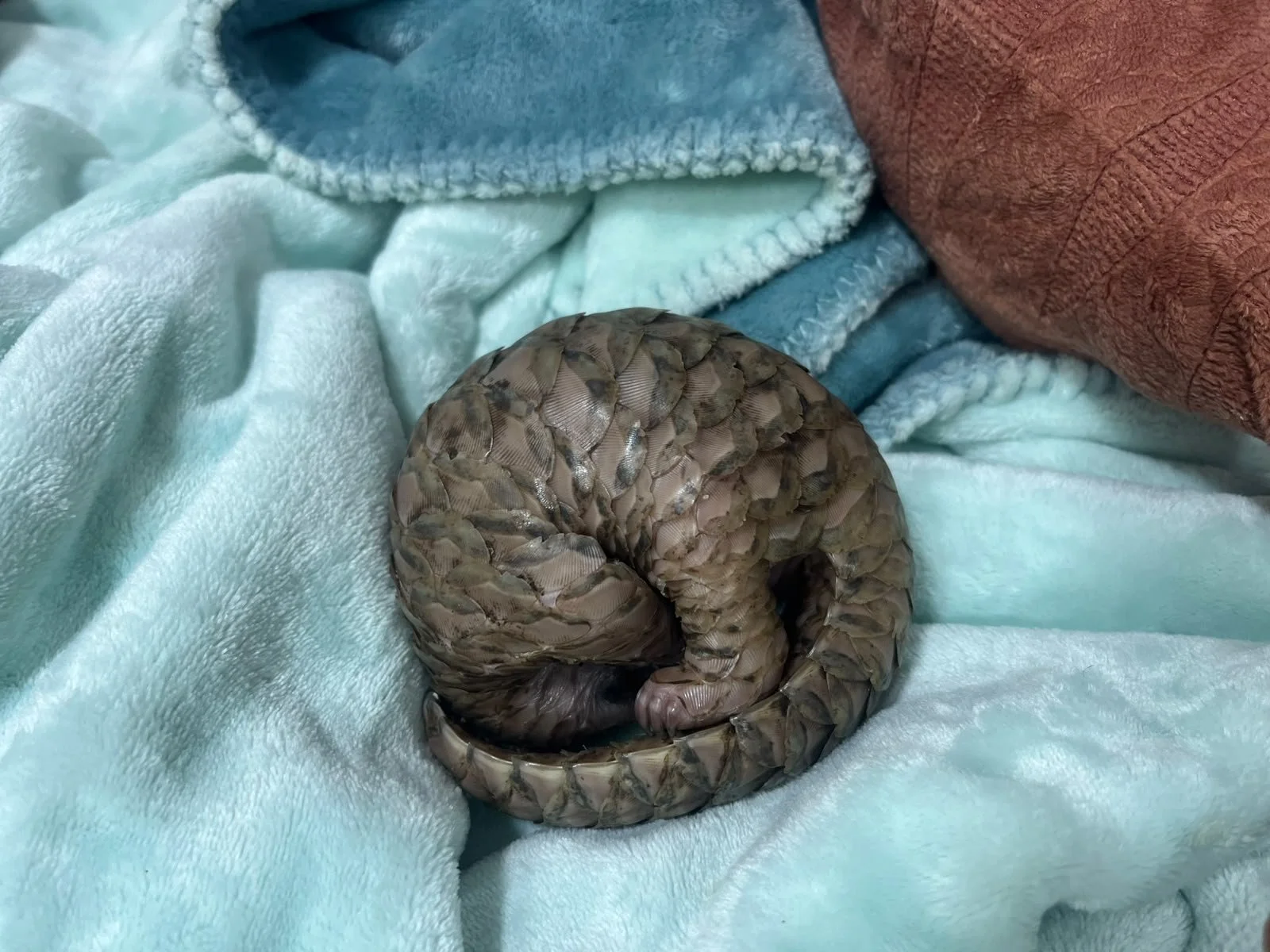
Week Beginning 9th November 2026 — A tiny pup in new home
He is doing really well and has put on 10% of his body weight in 10 days!
He is displaying digging, looking under things, kneading, rolling and use of tail, mouthing and sucking.
367g
The next chapter — Coming soon
Follow his progress as the team helps him grow stronger, one carefully monitored milestone at a time.
