
Searching the Mau: Could Giant Ground Pangolins Live Beyond Nyekweri?
Thirty kilometres into the Maasai Mau Forest, members of The Pangolin Project team pitched their tents beneath towering trees as rain moved steadily through the canopy. The cold and damp could not keep spirits down — two teams came together to confirm the presence of two of the country's most elusive species: the Mountain Bongo and the Giant Ground Pangolin.
In 2019, a camera trap image from the Maasai Mau suggested the possible presence of Giant Ground Pangolin. If confirmed, this discovery could reshape what we know about the species' range in Kenya and offer real hope for the sustainability of Kenya's Giant Ground Pangolin population.
In May and June 2026, TPP's Director Dr. Claire Okell and Doug Braum met with Director General Erustus Kanga and Senior Management at Kenya Wildlife Service to talk about the status of Giant Ground Pangolin and the shared interest in assessing other populations and the connectivity between them. A new partnership was formed and the search was on.
Why Look Beyond Nyekweri?
In Nyekweri Forest, The Pangolin Project is working to protect what may be Kenya's last known population of Giant Ground Pangolins. If this critically endangered species survives elsewhere, we must find it and assess connectivity between these populations both now and in the past to inform strategies for a sustainable population.
The Maasai Mau Forest, located around 120 km from Nyekweri, has long been recognised as an important refuge for wildlife, including the rare Mountain Bongo antelope. Other Guineo-Congolian species are present in the area, suggesting ecological conditions similar to Nyekweri. With this information, it is a well-justified decision to look at the possible presence of the Giant Ground Pangolin in the Maasai Mau.

A Collaboration Across Conservation Teams
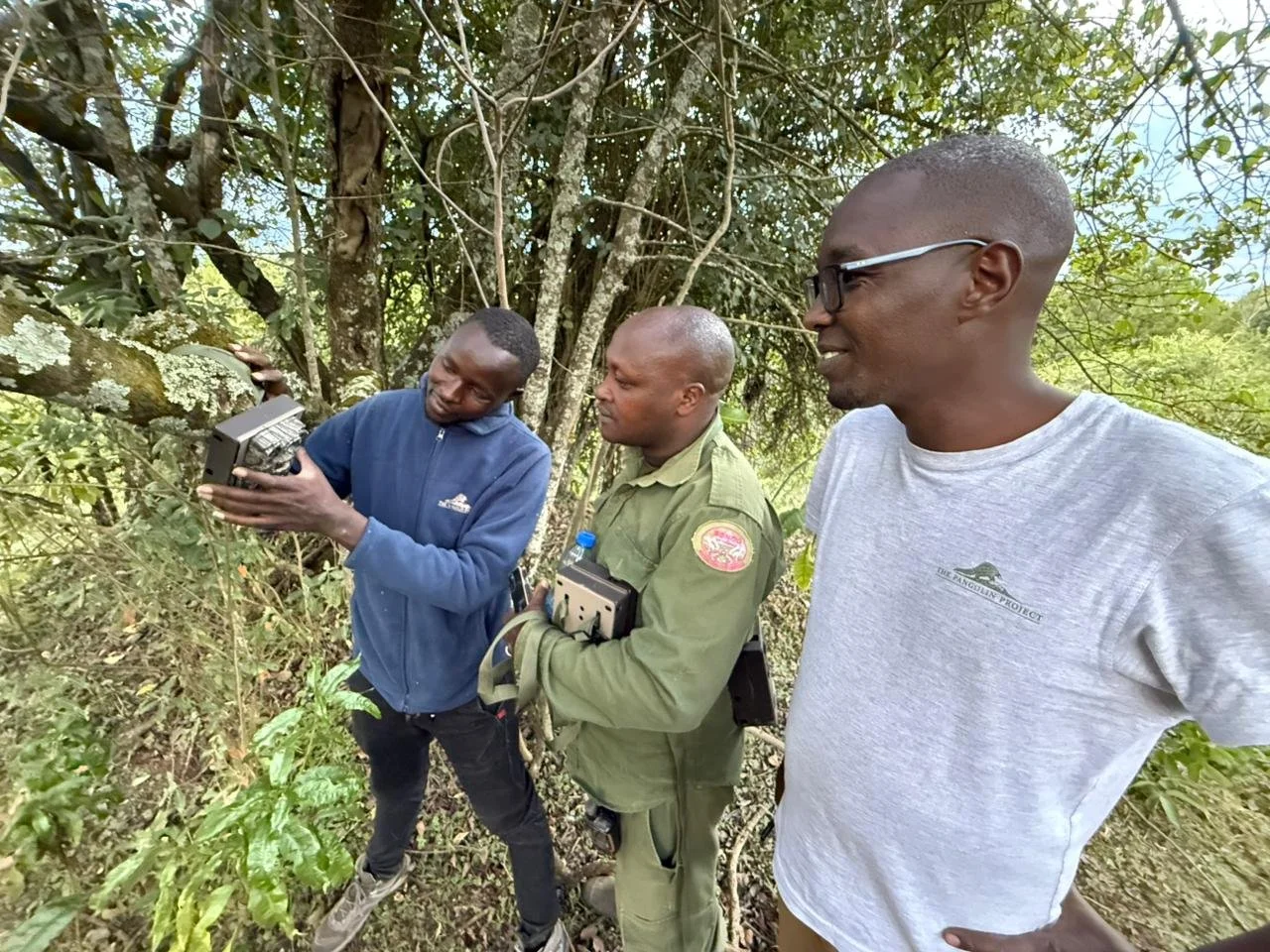
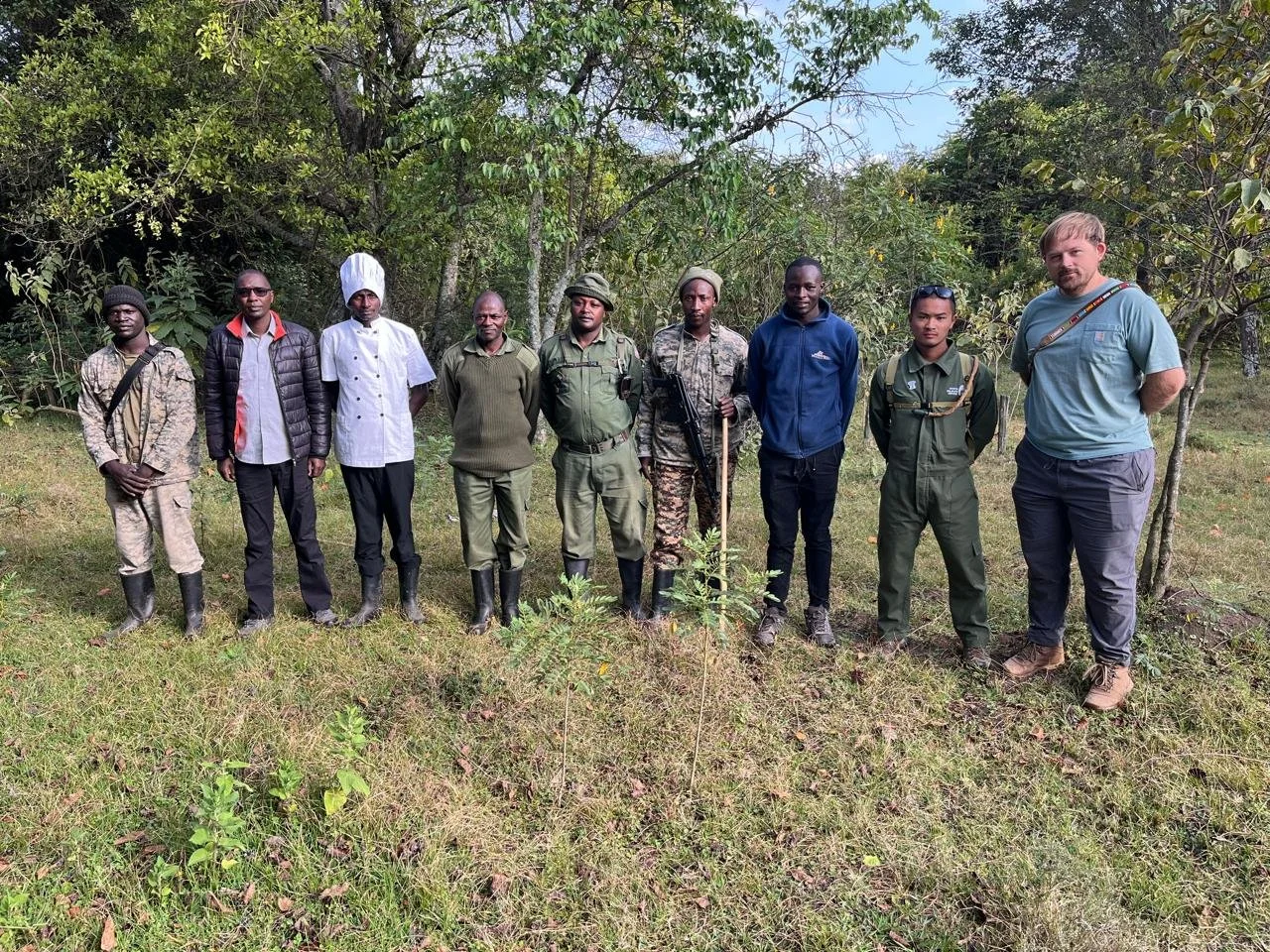
Exploring a forest as vast as the Mau requires collaboration. For this survey, The Pangolin Project partnered with the Kenya Wildlife Service, Kenya Forest Service, Mountain Bongo Project and Mara Elephant Project, combining expertise from teams already working in the area to monitor rare species. The monitoring effort for The Pangolin Project was led by Michael Koskei, Koen Betjes (Ecological Leader), Paul Nangida and Emmanuel Saitoti Nagut. TPP advisory board member Dr. Stratton Hatfield joined the team on a pilot assessment. Together with rangers from BSP and KWS, the team set out to search the forest for pangolin burrows and other signs of activity.
Reading the Landscape
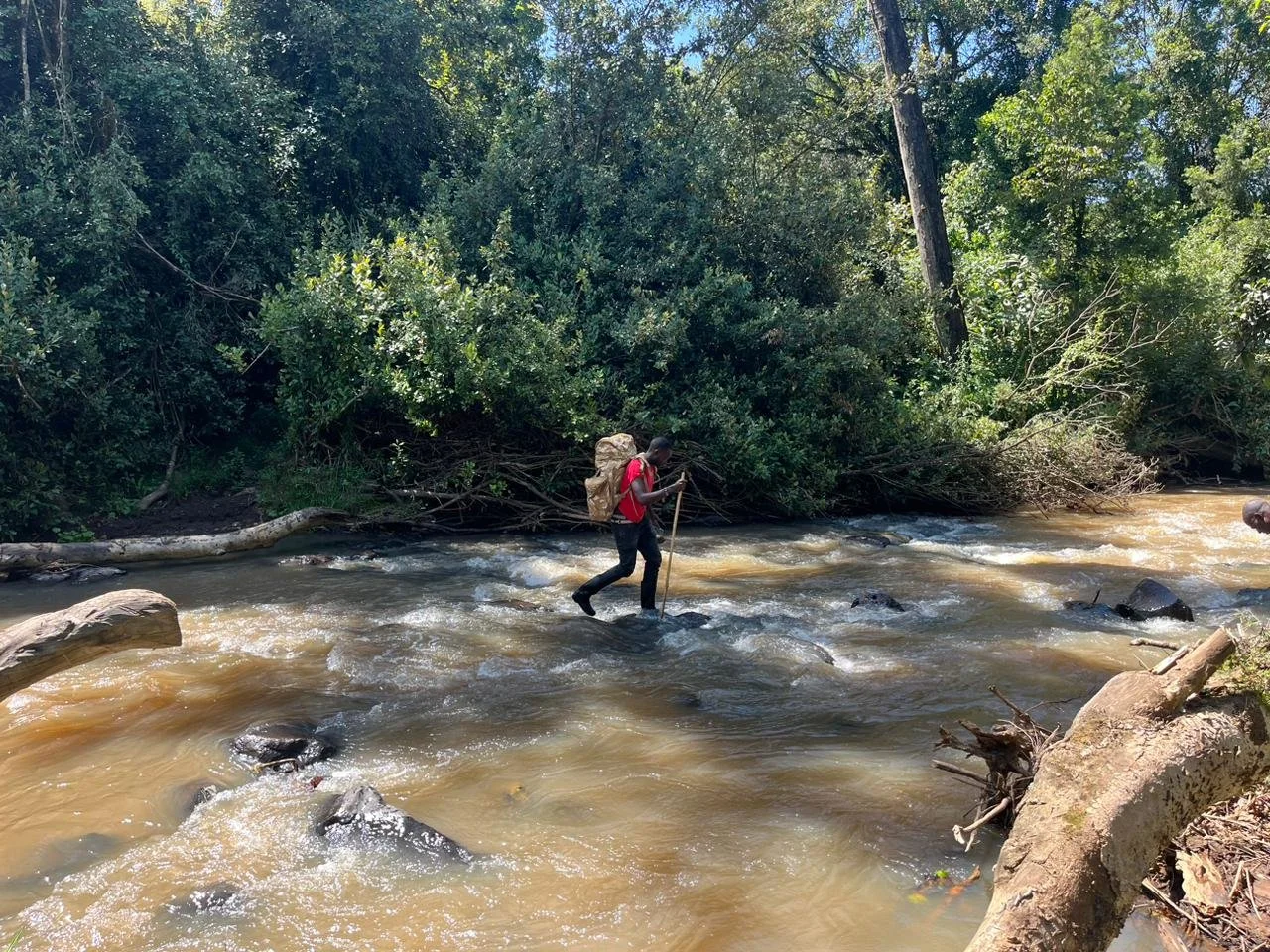
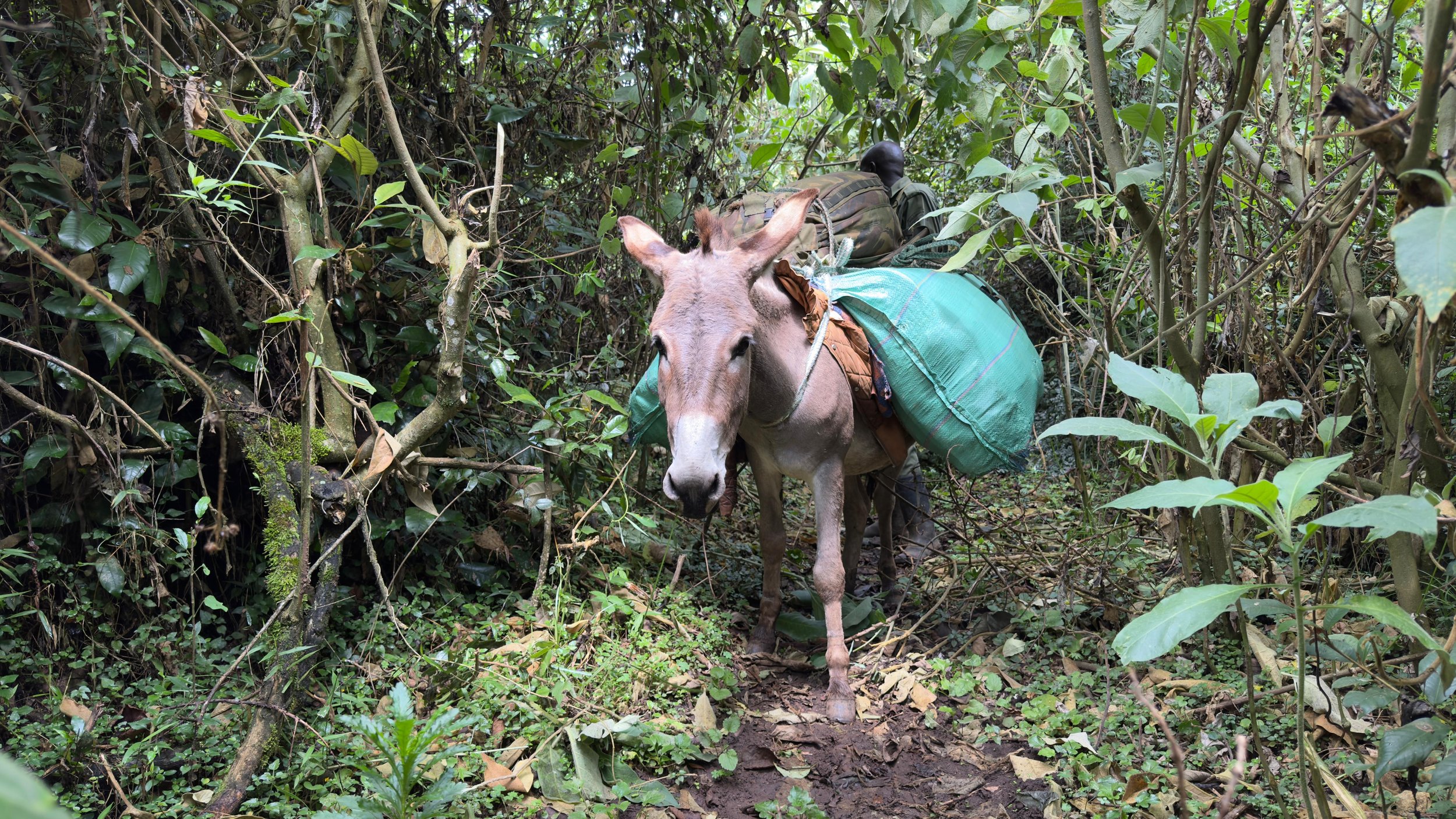
Searching for pangolins is rarely straightforward. The team walked long distances across steep hills, river valleys and dense indigenous forest. Carrying 40 camera traps in this terrain is hard, and local donkeys were used to carry food, provisions and equipment for the team. Over five days the team covered more than 90 km, scanning the landscape for burrows large enough to house a Giant Ground Pangolin and other signs of pangolin. After surveying grids of 200 m² for burrows, the 40 camera traps were installed.
“The possibility of finding Giant Ground Pangolins here matters deeply. Each confirmed burrow or camera sighting tells us whether this species has a future beyond Nyekweri.”
Each sign reveals a little more about the wildlife of the Mau, and keeps alive the possibility that pangolins may still move through this vast forest landscape.
What the Cameras Are Showing
While pangolins have not yet appeared on camera, the survey is already revealing the remarkable biodiversity of the Maasai Mau. 37 mammal species and 23 bird species have been recorded. Among the species recorded so far are aardvark, African civet, caracal, genet, blue duiker, red-legged sun squirrel, bushpig and Jackson's mongoose, a species endemic to the Maasai Mau.
These sightings confirm that the Maasai Mau remains a rich and functioning ecosystem, capable of supporting elusive nocturnal mammals such as the Giant Ground Pangolin. The search continues: the camera traps currently in place cover only a very small portion of this vast forest landscape, and additional survey areas are being explored together with our conservation partners.
Why This Search Matters
For the team, the possibility of Giant Ground Pangolins in the Mau remains deeply significant.
Even without an immediate sighting, the survey is already expanding our understanding of the Mau ecosystem and strengthening the partnerships between conservation organisations working across the region to contribute to protection. For pangolins, this is about the survival of a species within Kenya. Whilst our focus has been on the survival of the Nyekweri Giant Ground Pangolin — the presence of other populations and the location of safe sanctuaries for this species open up possibilities.
Our work in Nyekweri has shown that community-led conservation, ranger patrols and habitat protection can safeguard Giant Ground Pangolins. But securing the long-term survival of this species means understanding its full range across Kenya. Exploring landscapes like the Maasai Mau Forest helps us identify potential pangolin habitats, strengthen conservation partnerships across the country, and expand our understanding of where this species may still survive.
Protecting Kenya's last Giant Ground Pangolins means looking beyond the forests we already know, and into the landscapes where they might still be hiding.
Help us grow this movement by sharing our Power the Patrol campaign. Every new supporter brings us one step closer to keeping our patrols in the field every day and every night
Photo Credit: Koen Betjes