
New Year, New Eyes on the Forest
Every Pangolin Counts: From Reactive to Proactive Protection
At first glance, 96 camera traps might sound like a technology story.
In reality, they represent something much deeper: a shift from occasional pangolin sightings to daily awareness, from fragmented data to field-led protection, and from learning about pangolins to learning with them.
This evolving monitoring system now sits at the heart of Every. Pangolin. Counts - The Pangolin Project’s Giant Ground Pangolin monitoring and safeguarding programme. Working alongside Kenya Wildlife Service and the Wildlife Research and Training Institute, we are using what the forest shows us - night by night, to guide when, where, and how protection happens, always with animal welfare at the centre.
This blog marks the beginning of a living story. As the year unfolds, we’ll continue to share what the field is teaching us - what’s working, what’s changing, and what still needs our attention.
Thank you for being part of the story with us.
Why this work matters now
Despite more than 5,000 hectares secured for conservation, the future of Giant Ground Pangolins in the Nyekweri ecosystem remains fragile.
Pangolin pups have been recorded - a sign of hope - yet electric fencing continues to pose one of the most serious threats to the remaining adult population. Population estimates are currently under review, and what is already clear is this: pangolins do not stay neatly within protected boundaries.
They move between conservation land and agricultural areas, where risk increases sharply. In recent years, expanding farming, wider elephant movements, and prolonged dry conditions have driven a rapid increase in electric fencing across the landscape. In November 2025 alone, two adult Giant Ground Pangolins were killed on electric fences in agricultural areas - a stark reminder that protection on paper does not always mean safety on the ground.
This is the reality our monitoring and safeguarding work is responding to.
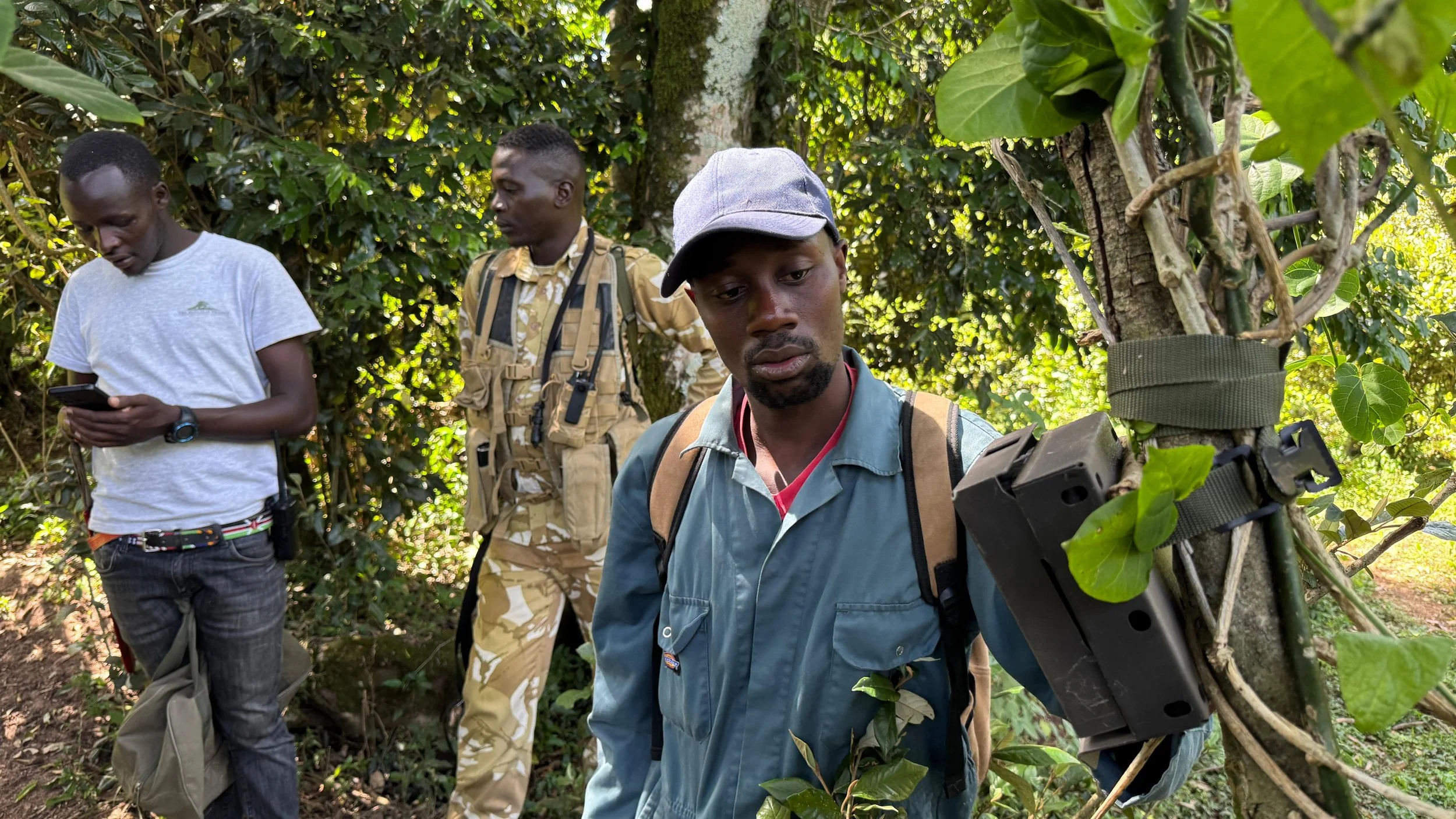
From “set and forget” to daily presence
Camera traps have been used in Nyekweri since 2022. But in 2026, our approach has shifted.
Instead of static placement and infrequent checks, the team is working toward a system where nearly 100 camera traps are deployed across the forest, checked daily, and reviewed directly in the field. Only priority footage is removed - allowing insights from last night to inform decisions made today.
That shift may sound subtle. In practice, it changes everything.
Daily awareness means faster response, smarter deployment, and a living picture of how pangolins are using the landscape in real time.
What the cameras are already telling us
In 2025 alone, 859 camera trap videos were recorded. Giant Ground Pangolins were seen on average 20.7 nights per month, across nearly 20 different burrows.
Footage has captured rare and powerful moments - pups, feeding behaviour, territorial interactions, and predation events. Just as importantly, it has shown us where pangolins are no longer present. Three areas no longer record Giant Ground Pangolin sightings following deforestation. Absence, too, is data, and it is shaping where protection must now focus.
Take a look at these fresh foraging signs on a patrol to help us select places to put up our camera traps
From monitoring to safeguarding: why tagging matters
Camera traps tell us where pangolins are.
Tagging helps us understand how far they move - and when they are at risk.
Between 2022 and 2025, five Giant Ground Pangolins were tagged in Nyekweri in collaboration with KWS and WRTI. While tag retention varied and limitations were encountered, the learning has been invaluable. Tagging revealed that individuals can range over up to 52 km², crossing multiple land parcels and moving through high-risk zones.
This insight directly informed targeted engagement with landowners and led to the de-electrification of around 100 kilometres of electric fencing, particularly the lower live strands most dangerous to pangolins. Tags have also enabled teams to locate and treat injured individuals, including a pangolin electrocuted in 2025.
Tagging is never an end in itself. It is a tool - used carefully, questioned constantly, and adapted as understanding improves.
Every. Pangolin. CountS.
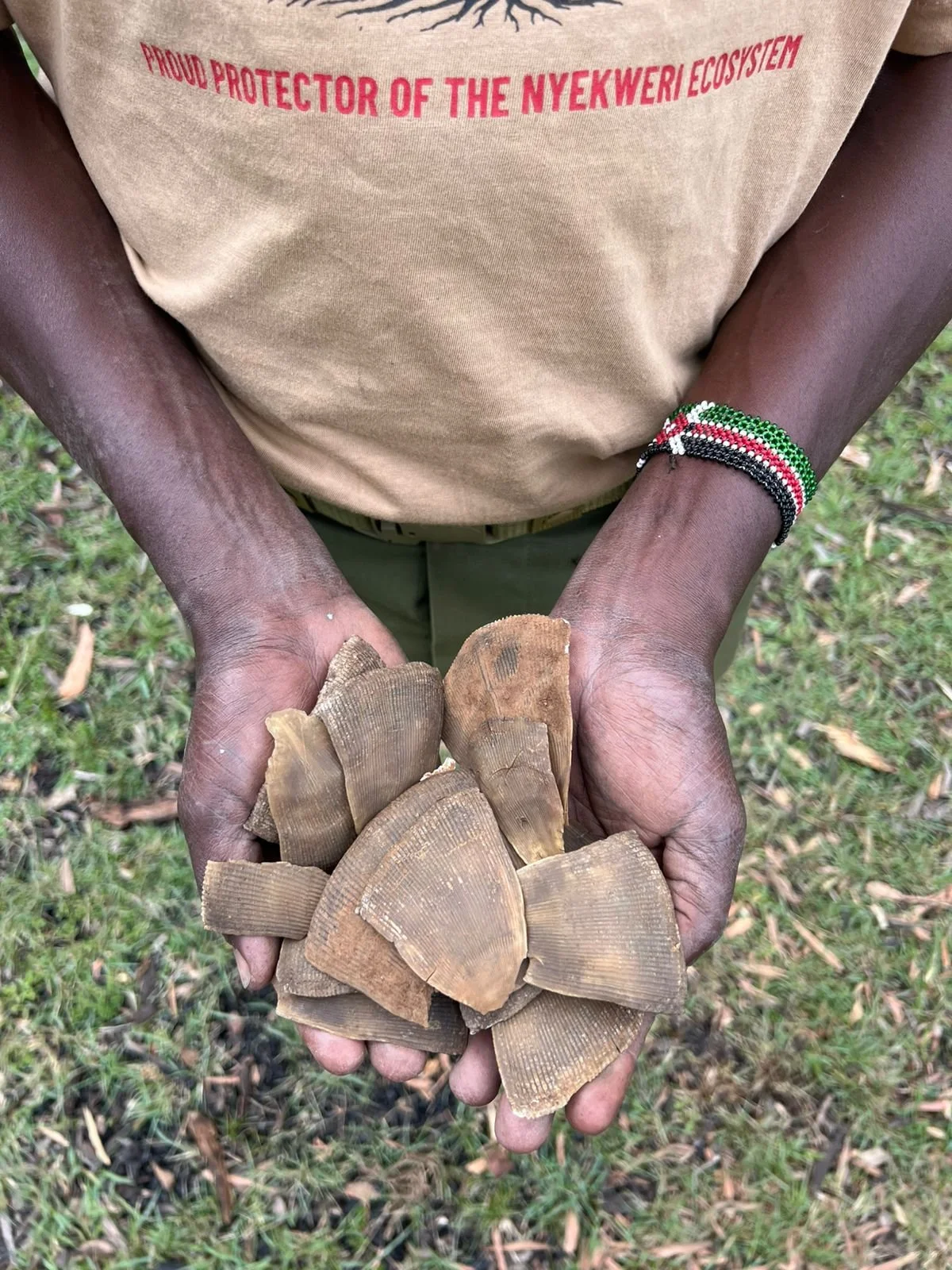
This work now comes together under Every. Pangolin. Counts - a programme designed to move from reactive response to proactive protection.
By combining daily monitoring, ethical tagging, and rapid field response, we can identify risk before it becomes tragedy: switching off fences, targeting mitigation, and guiding long-term conservation decisions. In a landscape where a single live fence can be fatal, this visibility can mean the difference between life and loss.
Listening better, protecting smarter
Watching the forest more closely doesn’t mean controlling it.
It means listening better, responding faster, and staying humble about what we don’t yet know.
The 96 eyes now watching over Nyekweri are helping us do exactly that - revealing where pangolins move, where danger lies, and where protection is beginning to work. This blog will continue to evolve as the year unfolds, shaped by what the field teams see and learn.
The forest is still teaching us.
And we’re still listening.
World Pangolin Day: help us power the patrol
This month, as we mark World Pangolin Day, we’re asking our community to help us Power the Patrol - the rangers, monitoring teams, and rapid response efforts that keep pangolins safe where protection matters most.
Every patrol funded means:
faster response to risk,
stronger protection across pangolin pathways,
and a better chance for the last giants of Nyekweri to survive.
Every pangolin counts.
And together, we can keep them safe.
FAQS - Have you got a question you would like answered by our team?
Just drop us a line ebony@thepangolinproject.org or DM us on Instagram. We will update this section as your questions come in!
-
We started by placing camera traps in one area, and now we’re positioning them in a much more strategic way. We try to spread them out as much as possible so we can understand which areas pangolins use most frequently.
We place the cameras where we see clear signs of pangolin activity- such as tracks, or burrows that look actively used by pangolins, or at least not heavily used by warthogs. That helps us make sure the footage we capture is relevant and informative.
-
There are many animals in this forest that use burrows, so it’s often very difficult to tell which ones belong to pangolins. In many cases, multiple species use the same burrow, which makes things even more complicated.
What helps us is looking for specific signs. Sometimes we find scale marks in the mud or sand. When the ground is really muddy, you can also see clear tracks—actual footprints. And occasionally, we find dung, which is very helpful in confirming that a pangolin is around.
-
At the moment, we’re trying to tag pangolins and find out where they are, so we’re camera trapping very intensively- visiting the burrows or camera traps every single day.
Normally, when you’re monitoring a pangolin, you try not to visit too often. That way, you allow them to behave as naturally as possible and avoid disturbing them too much.
-
Ideally, it’s best to have camera traps on a burrow for a longer period of time. We do that with the burrows where we see pangolins.
But with other burrows, we often have to keep changing the camera traps because they’re used by many different animals-warthog families, hyenas, porcupines, pouched rats.
So it’s really about finding out where the pangolins are. Once we know which burrows they’re using, we’ll definitely keep the camera traps there for much longer
-
Pangolins are very elusive animals, so camera traps really help us study them. They allow us to capture interactions between pangolins that we would never be able to observe when we’re physically there.
For example, many male pangolins are marking burrows, and through camera trapping we can start to understand how they do this and how frequently. It’s giving us a huge amount of information about giant pangolins that we simply didn’t know before
-
Camera trapping only gives us insight into the lives of giant pangolins around burrows. It doesn’t tell us much about how they move through this human-dominated landscape, or how they forage- for example, what they’re eating and which species they’re feeding on.
Tagging pangolins, or directly observing them, gives us a completely different insight into the lives of giant pangolins.
-
Tagging always happens with a very experienced team. The goal is to work as quickly as possible, limit the amount of time we disturb the animal, and, of course, reduce stress as much as we can.
It’s also very important—especially if the pangolin is a female—to make sure she doesn’t have a baby. Tagging could separate a young pangolin from its mother, so that check is essential.
-
Tracking pangolins with GPS tags gives us a lot of information—like how often they cross fences, how far they move each night, how frequently they visit foraging areas, and how often they use the same burrows.
There’s still so much we don’t know, and tagging giant pangolins helps us gather information we simply couldn’t get any other way.”*
-
As we mentioned, we always aim to do tagging as quickly as possible with a very experienced team to minimise stress. There are also strict standards we follow when tagging.
For example, the tag is not allowed to exceed a certain percentage of the animal’s body weight—and with the tags we use, we are well below that limit.
-
By GPS-tagging pangolins, we can monitor them very effectively. This allows us to intervene when needed- whether that’s guiding them away from danger, relocating them, or responding when they get too close to fences.
There are even systems that can alert us when a pangolin is approaching a fence. GPS tagging gives us real, practical ways to protect pangolins better from these threats.
